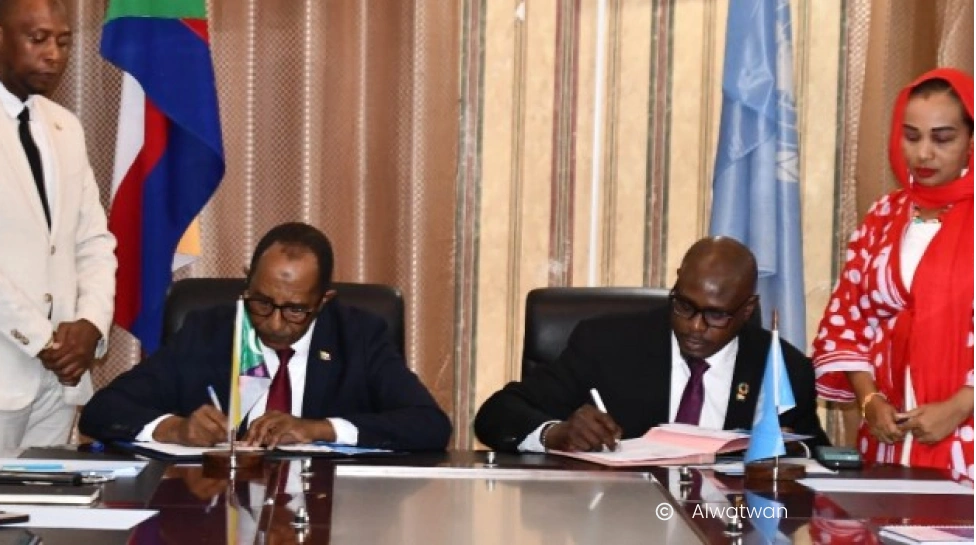
Abubakar Ben Mahamoud Advocates for Vulnerable Nations
The world is already experiencing 1.2°C of warming, and the temperature could reach +2.7°C by the end of the century without ambitious measures. Abubakar Ben Mahamoud, Comorian Minister of the Environment, issued this warning yesterday at the COP in the Amazon, a global symbol of ecological resilience.
He thanked Brazilian President Lula da Silva for his warm welcome and the exemplary organization of this conference, which he described as “historic.”
Every additional fraction of a degree increases the risks. Coral reefs could disappear almost entirely at +2°C, and more than a billion people could be displaced by 2050. Developing countries, although they contribute little to global emissions, suffer the heaviest losses, with economic damages exceeding USD 500 billion per year by 2030.
In the Comoros, the situation directly affects the population. More than 60% of the population lives along the coast and faces rising sea levels. Erosion is destroying arable land, and cyclones are becoming more intense. Cyclone Kenneth in 2019 affected 345,000 people and caused an estimated $185 million in damage, representing nearly 16% of the national GDP.
To address this emergency, the Minister called for formal recognition of the specific needs of Small Island Developing States (SIDS). “This measure must guide international funding and decision-making to ensure the equitable participation of vulnerable countries,” he stated.
Current contributions cover only 30% of the reductions needed to limit warming to 1.5°C. Mahamoud proposes three priorities: halting deforestation by 2030, tripling renewable energy capacity by 2035, and doubling adaptation funding by 2030.
The financial commitments made at COP29, including USD 300 billion per year, require swift implementation. The actual needs of developing countries exceed USD 1.3 trillion per year by 2035. Currently, only 10% of adaptation funding reaches the most vulnerable populations.