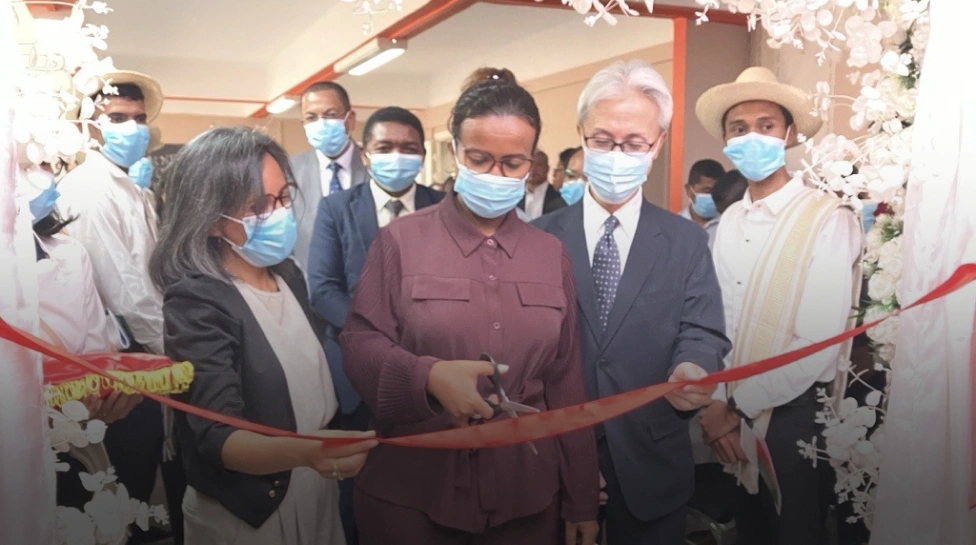
Technicians Trained to Diagnose and Protect
As part of the One Health approach, laboratory technicians from various regions of Madagascar are participating in intensive training at the Centell Antanimena from January 26 to 30, 2026.
The program focuses on biosafety, biosecurity, biomedical waste management, and sample transport and handling to strengthen the practical and operational skills of the participants. This project is part of the Pandemic Preparedness and Basic Health Services Delivery Project (PPSB), funded by the World Bank and implemented by UNOPS.
The training aims to strengthen national pandemic preparedness and response capacities by investing in the women and men on the front lines of health security. Recent epidemics, such as Mpox, underscore the urgent need for safe, functional, and rapidly operational laboratories. Rapid diagnosis, safe sample handling, and staff protection are crucial for an effective response.
From day one, participants are immersed in real-world scenarios closely resembling their professional work. Practical exercises highlight the challenges encountered in the field: strict adherence to biosecurity protocols, secure waste management, sample handling, and biological risk prevention. Technicians learn by experimenting, exchanging ideas, and testing solutions adapted to operational realities.
UNOPS, the Medical Analysis Laboratory of Madagascar (LA2M), and the National Veterinary Diagnostic Laboratory (LNDV) support the training, providing exchanges based on concrete experiences and real-world cases. Participants leave with skills immediately applicable in their laboratories and in the field. A multi-site field immersion day completes the program, including visits to national reference laboratories. Participants compare theoretical knowledge with operational realities, observe best practices and draw lessons directly transferable to their daily work.