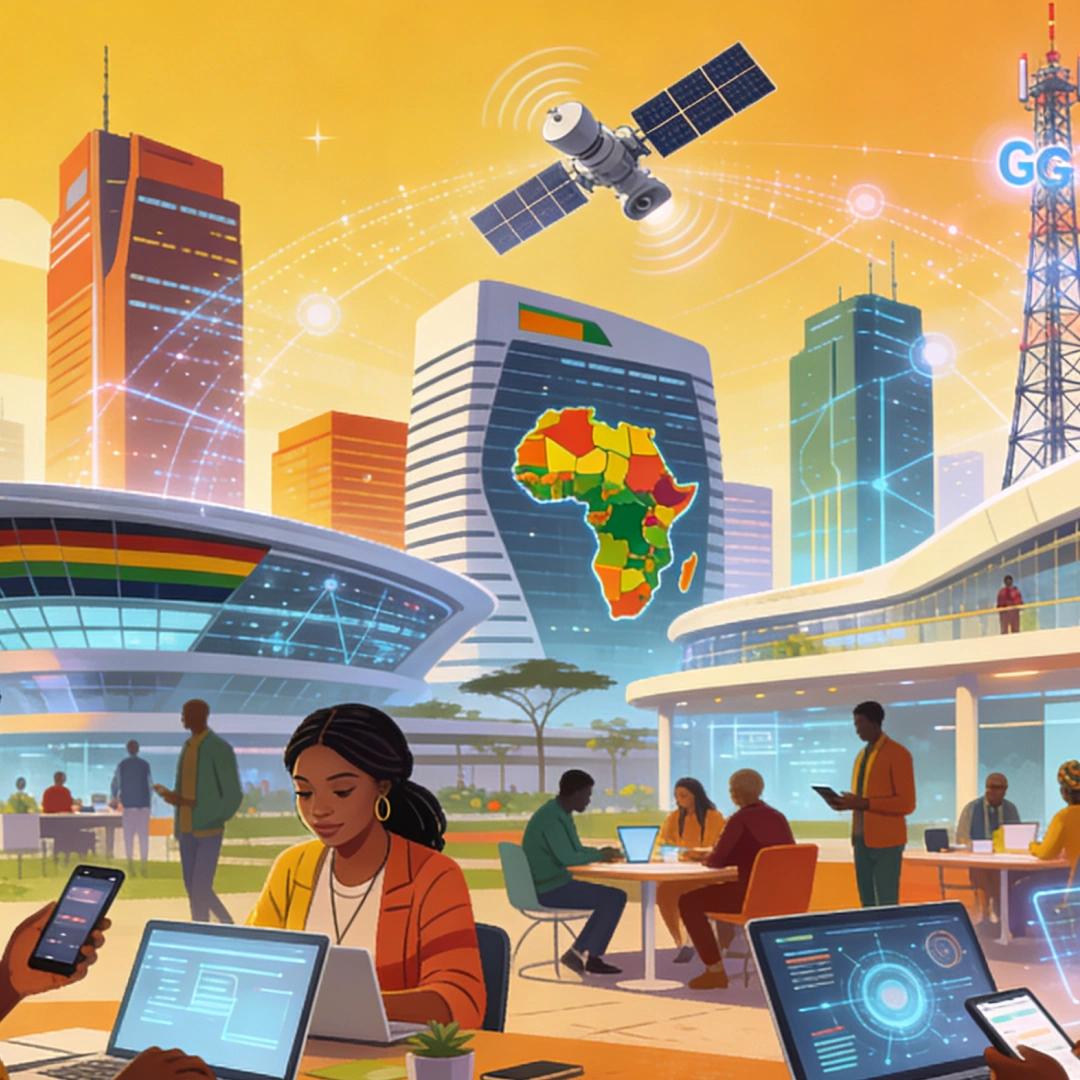
Zambia and Mozambique have just inaugurated the Chanida-Cassacatiza cross-border fiber optic link, connecting the Zambian national backbone to the Mozambican submarine cable network, marking a major milestone in regional digital integration. This project, implemented by Bayobab Zambia and Vodacom Mozambique, strengthens connectivity, network resilience, and access to high-speed internet in Southern Africa.
A strategic project on the Chanida-Cassacatiza border
The inauguration ceremony took place on February 21, 2026, at the Chanida (Zambia, Eastern Province) – Cassacatiza (Mozambique) border, in the presence of Ministers Felix Mutati (Technology and Science, Zambia) and Américo Muchanga (Communications and Digital Transformation, Mozambique). This fiber optic interconnection links Zambia’s terrestrial network to the 2Africa submarine cable, providing direct international bandwidth and increased redundancy in the event of outages.
Developed through a public-private partnership by Bayobab Zambia (an MTN subsidiary) and Vodacom Mozambique, the project is part of a broader initiative that includes a One-Stop Border Post (OSBP) to streamline trade. Felix Mutati welcomed this development, stating that Zambia is now “the most digitally connected country in Southern Africa,” with fiber links to eight neighboring countries.
Context and technical challenges
Landlocked Zambia is relying on digital infrastructure to compensate for its geographical isolation and become a regional digital hub. This fiber optic link fills a missing link by connecting Zambia’s national backbone (over 7,100 km of fiber) to East African submarine cables like 2Africa, which connect Europe, Asia, and Africa.
Technical benefits include improved internet reliability, reduced latency for cross-border data exchange, and increased capacity for cloud services, e-governance, and mobile payments. Américo Muchanga emphasized that this bilateral cooperation will improve the lives of citizens in both countries, while Lillian Mutwalo (CEO of Bayobab Zambia) described it as a “game changer” for positioning Zambia as a connectivity hub.
Economic and Trade Impacts
This project is integrated into the trade corridor linking Zambia to the ports of Beira and Nacala in Mozambique, facilitating Zambian mining and agricultural exports to the Indian Ocean. The Single Border Post (SBP) reduces customs processing times, logistics costs, and administrative formalities, boosting bilateral trade and supporting the AfCFTA.
For businesses, the fiber optic interconnection facilitates real-time data exchange between Zambian and Mozambican customs, improving transparency, tax revenue collection, and attractiveness to investors. Simon Karikari (CEO of Vodacom Mozambique) notes that this accelerates access to high-speed digital services, aligning with Mozambique’s ambition of “Internet for all by 2030.”
Benefits for Communities and Digital Inclusion
The fiber optic infrastructure reaches rural areas such as Zambia’s Eastern Province and adjacent regions of Mozambique, which are often underserved by connectivity. It supports digital social transfers, online public services, and distance education, which are particularly crucial for isolated communities.
Felix Mutati compares digital infrastructure to roads and energy, highlighting its role in the emerging digital economy. The project also promotes inclusion by minimizing network duplication, optimizing resources, and reducing the environmental footprint through infrastructure sharing.
Policy Framework and Enabling Reforms
The success of this link depends on Zambian reforms: the elimination of tariffs on digital equipment imports and an attractive regulatory framework for private companies. This aligns with Zambia’s Vision 2030 and the ambitions of MTN (Bayobab) and Vodacom to connect 260 million Africans by 2030.
Bilateral cooperation, invoking the legacy of Samora Machel (“Tulipo… we are here”), strengthens the historical ties between the two nations, fostering economic integration within SADC and the AfCFTA.
Regional and Continental Perspectives
This interconnection positions Zambia as a digital hub in Southern Africa, with links to eight neighboring countries, and opens up opportunities for further cross-border fiber corridors. It accelerates digital transformation in Africa, supporting e-commerce, fintech, and industrialization through reliable and affordable connectivity.
For Mozambique, this consolidates its role as a maritime-digital gateway, connecting the continent’s interior to global submarine cables. In the future, extensions could include other SADC countries, strengthening regional economic unity in the face of the challenges of the digital divide.
✍️ Want to contribute a high-value article?
Contact us for a guest post : [email protected]
Write to the editorial team