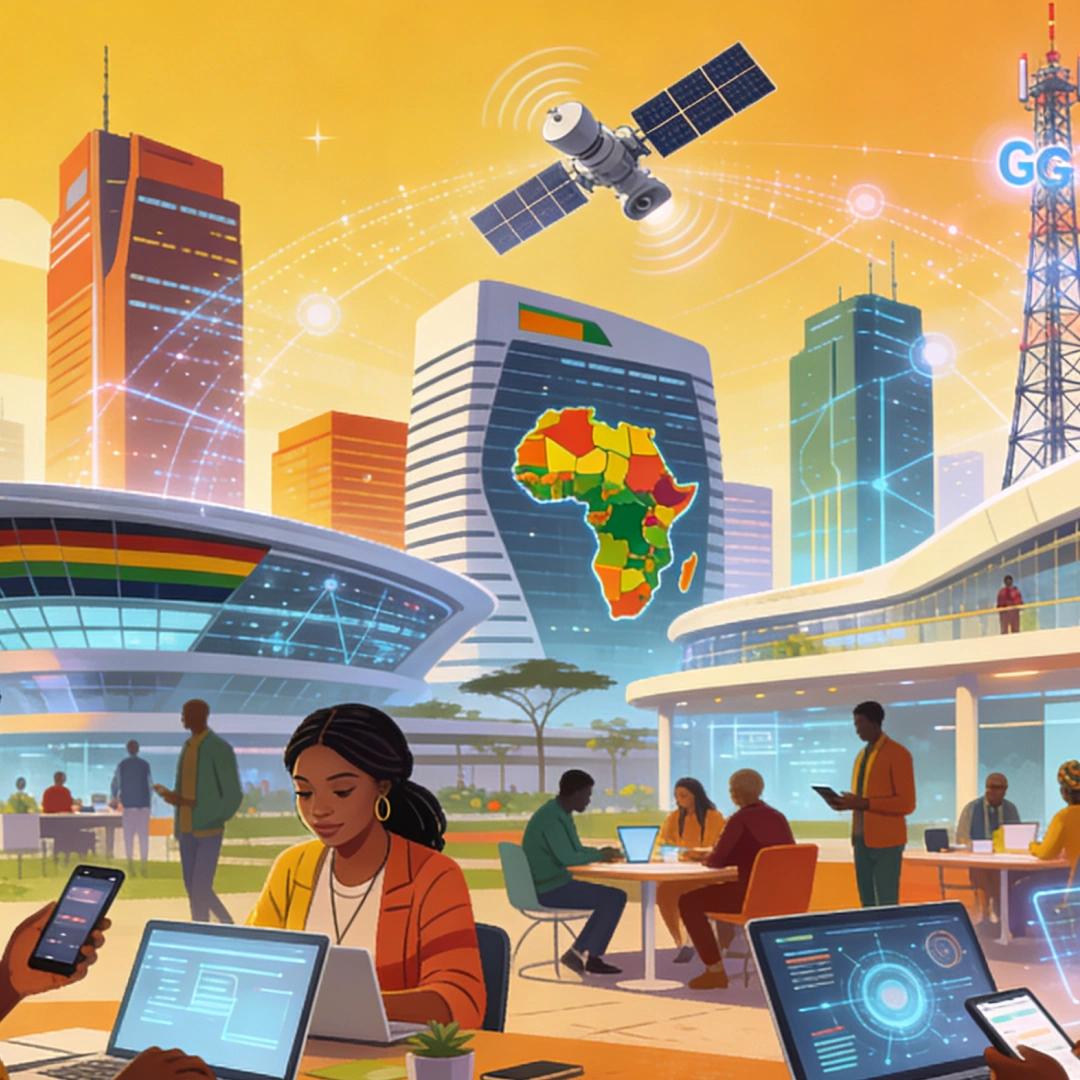
Nigeria is taking another step in its digital transformation with the support of the African Development Bank (AfDB), which has approved $200 million in funding to accelerate the nationwide deployment of fiber optics. This funding is part of the BRIDGE project, a broader program aimed at modernizing the country’s digital infrastructure and expanding broadband access to underserved areas.
A Strategic Project for the Digital Economy
The project’s objective is ambitious: to expand the national fiber optic network from approximately 30,000 km to 120,000 km, with coverage targeting all 774 local governments in the country. The program, combined with broader sovereign financing, also aims to increase broadband penetration to around 70% by 2030, compared to nearly 45% currently.
This surge in connectivity is expected to serve as a catalyst for several sectors, including digital government, education, financial services, e-commerce, and the activities of young entrepreneurs. The AfDB believes this infrastructure will help reduce a long-standing connectivity gap and create large-scale economic opportunities.
Why this announcement matters
Nigeria is one of Africa’s largest digital markets, but its potential remains hampered by unparalleled network coverage and still-high access costs in many areas. By strengthening its digital backbone, the country aims to build a stronger foundation for attracting investment, improving public services, and supporting business competitiveness.
The BRIDGE project is more than just laying cables. It is also a development tool, capable of stimulating job creation and expanding digital inclusion. According to projections reported in the press, the initiative could generate up to 2.8 million jobs over its lifetime.
A Momentum Already Underway
This new step comes after several preparatory initiatives. In January 2025, Nigeria had already launched feasibility studies for a vast deployment of 90,000 km of fiber optic cable, supported by a $2 million grant from the USTDA.
The country had also mentioned a broader need for financing to address its digital infrastructure deficit. The AfDB’s support thus confirms a fundamental trend: the increasing importance of international financing for connectivity, which has become a central issue for growth and digital sovereignty.
A Strong Signal for Africa
Beyond Nigeria, this decision sends an important message to the continent. Broadband is no longer just a technological issue, but a true driver of economic development, employment, and regional integration. Countries that invest early in fiber optics gain an advantage in the race for the digital economy.
By investing in a more robust and inclusive infrastructure, Nigeria clearly aims to position itself as one of Africa’s major digital hubs. If the project is completed on schedule, it could permanently transform internet access and accelerate the emergence of a more connected, productive, and competitive economy.
Conclusion
With this AfDB funding, Nigeria is taking another step toward its digital ambitions. The BRIDGE project could become one of the continent’s most significant connectivity initiatives, with anticipated impacts on employment, innovation, and inclusion.
✍️ Want to contribute a high-value article?
Contact us for a guest post : [email protected]
Write to the editorial team