New Inflation Forecasts from the Bank of Mauritius
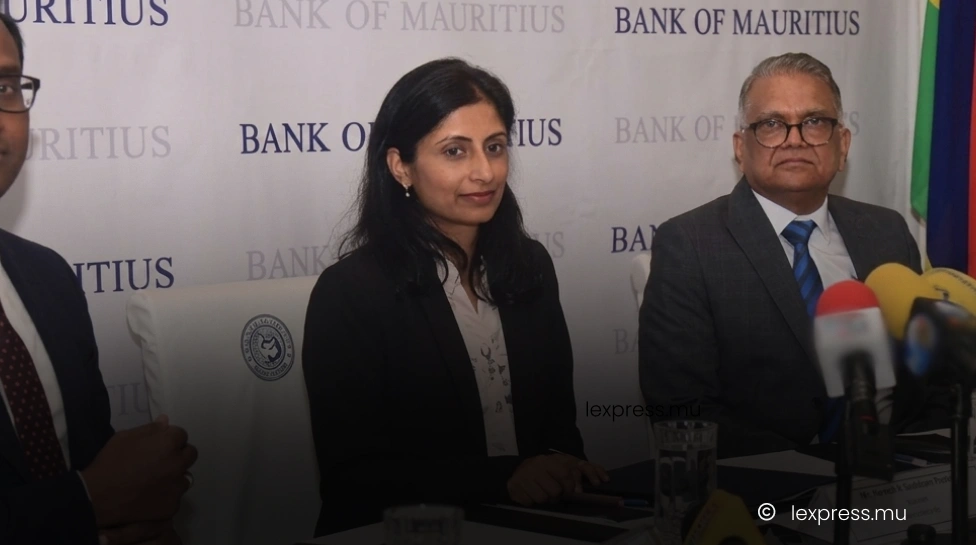
The recent decision by the Monetary Policy Committee (MPC) of the Bank of Mauritius (BoM) to raise the key interest rate from 4.50% to 4.75% per annum sparked lively debate in the National Assembly yesterday during the Private Notice Question (PNQ) posed by the Leader of the Opposition, Joe Lesjongard, to Prime Minister Navin Ramgoolam.
In response, the Prime Minister immediately emphasized the Bank of Mauritius’s regained “complete independence” since his administration came to power. According to him, unlike the previous government, no political pressure is now being exerted on the central bank’s decisions.
Navin Ramgoolam strongly criticized the previous government’s interventions in the management of the BoM, arguing that they had significantly weakened the national financial system. “The consequences of this interference were very damaging and constituted a direct threat to the stability of the banking and financial system,” he told parliamentarians.
The Prime Minister also addressed the Bank of Mauritius’s new inflation forecasts. Based on an average oil price of US$90 per barrel and the reopening of the Strait of Hormuz by the end of June 2026, these forecasts now project general inflation of around 5.5% this year, compared to a previous estimate of 3.6%. This level would thus exceed the target range of 2% to 5%.
He further emphasized that core inflation—which excludes volatile products such as fuels and food—had already reached 6.1% year-on-year in April 2026, a sign, according to him, of strong domestic inflationary pressures.
Attributing this situation to the monetary policies implemented between 2019 and 2024, Navin Ramgoolam indicated that the Bank of Mauritius had transferred Rs 97 billion to the government during this period, in addition to Rs 81 billion injected into the financing of the Mauritius Investment Corporation. According to him, this significant money creation led to excessive liquidity in the market, fueling inflation and accelerating the depreciation of the rupee.
The Prime Minister noted that in August 2023, the excess liquidity had reached nearly Rs 90 billion, while inflation peaked at 11.3% in February of the same year.