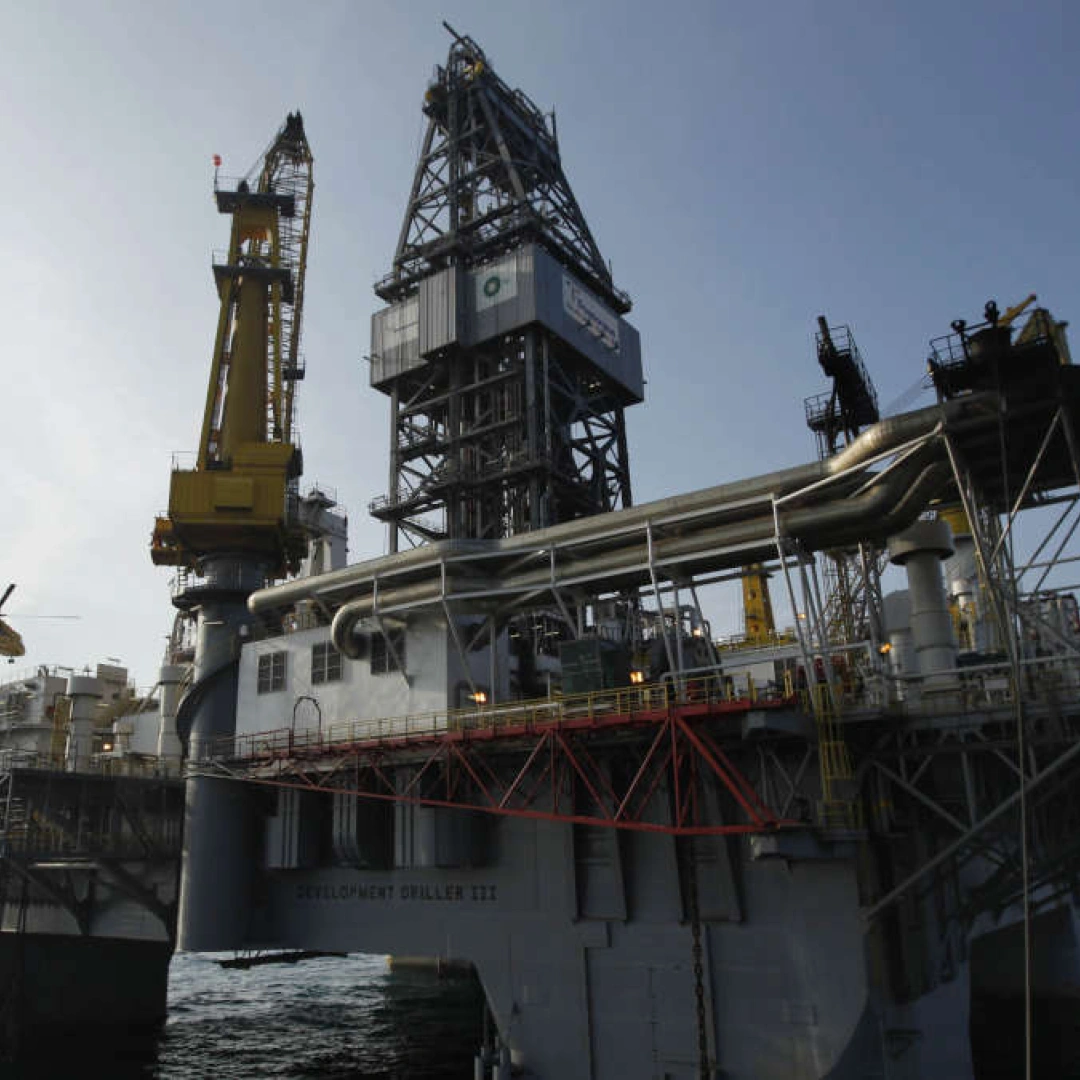
Congo is counting on its oil cargoes to generate 907.9 billion FCFA in 2026, according to the finance law adopted at the end of 2025, confirming oil as the central pillar of public finances. These revenues, representing approximately 36% of the state’s total resources (2,550 billion FCFA), illustrate Brazzaville’s persistent dependence on oil revenues despite diversification efforts.
Oil, the Primary Source of “Other Revenues”
Crude oil sales dominate budget projections: far ahead of gas (81 billion FCFA), timber, or mining, they are based on an optimistic assumption of volumes and prices (an average of USD 60.3/barrel). Supplemented by oil bonuses (44 billion FCFA) and royalties (13 billion FCFA), they represent a significant portion of the overall expenditure budget of 2,320 billion FCFA.
- Total oil revenues: 965 billion FCFA (908 sales + bonuses + royalties).
- Budgetary share: 36% of total revenues, exposing the State to global price shocks.
- Price assumption: USD 60.3/barrel, based on the maturity of Congolese oil fields.
A strategy focused on commercial development
Faced with mature production and technical constraints, Brazzaville prioritizes the efficient sale of existing cargoes rather than a massive increase in volume. The tax prices for crude oil (Djeno, Nkossa, Yombo) were recently set at an average of USD 62.6/barrel for the end of 2025, confirming the competitiveness of Congolese oil.
Challenges of an Oil-Dependent Economy
These 900 billion CFA francs secure budget execution (current expenditures, investments, debt), but expose Congo to volatility: anticipated decline in global oil prices (50-60 USD/barrel in Q1 2026) and operational risks. Finance Minister Christian Yoka emphasizes optimal management and strengthened budgetary discipline.
- Risks: OPEC+ price fluctuations, technical interruptions in mature fields.
- Outlook: Target production of 500,000 barrels/day by 2027 (double current), via TotalEnergies, Perenco, and Trident.
- Diversification: Boosting non-oil tax revenues (taxation, mining).
Towards a refinery and a gas hub
Congo is accelerating its development: the Fouta refinery (2.5 million tons/year starting at the end of 2026), Congo LNG (3 million tons of LNG/year via Eni), and a new oil and gas tender in 2026. These projects aim to transform gross oil revenue into local added value, while consolidating its third-place ranking in sub-Saharan Africa (behind Nigeria and Angola).
In 2026, the 900 billion CFA francs in oil revenue will be the key to the budgetary strategy: the ability to fully mobilize these funds will determine Congo’s macroeconomic trajectory in an uncertain global market.