Following escalating tensions in the Middle East involving Iran, the United States, and Israel, gas prices in Europe have surged by more than 40% on the TTF hub, reaching nearly €46/MWh, while oil prices are soaring, threatening continental supplies. The halt in LNG production in Qatar, the world’s leading exporter, is reviving fears of shortages, with European stocks at less than 30% capacity.
Geopolitical Context
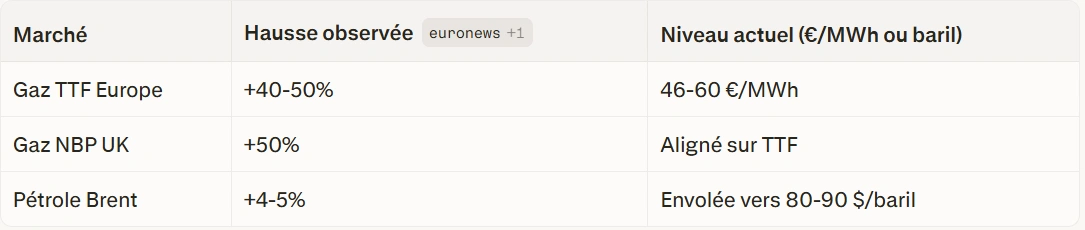
US and Israeli strikes against Iran have led to the closure of the Strait of Hormuz, a vital chokepoint for 20% of the world’s oil and Qatari LNG exports to Europe. QatarEnergy has suspended operations at North Field, its giant gas field, causing immediate volatility: a 45% jump on the TTF and a 50% jump on the UK’s NBP in a single day. This crisis comes at a time when Europe, diversifying its energy sources after Ukraine, still relies on Qatari LNG for 12-14% of its needs.
Market Impacts
The price of gas subject to the TTF (Total Financial Transaction) jumped from €32/MWh at the end of February to over €60/MWh in mid-March, a cumulative increase of 80-90% in just a few days. Brent crude oil prices rose by 4-5%, amplifying inflationary pressure on energy. Goldman Sachs warns that a one-month gas freeze could push prices up to €74/MWh, forcing industrial shutdowns similar to those seen in 2022.
Economic Consequences
French households’ energy bills were already rising by €60 per year, based on the CRE (Energy Regulatory Commission) benchmark price of €0.140/kWh (+3.8%), even before the surge in the TTF. Germany (stocks at 20.5%) and France (21%) risk rationing, impacting industries and heating. Asia, competing with Europe for spot LNG, is exacerbating the global price increase.
Outlook and Solutions
Low stocks (compared to 40% last year) necessitate costly replenishment in the spring. The EU could activate contingency plans: priority rationing, accelerated US imports, or a temporary boost to coal. In the long term, accelerating renewables and interconnections is essential given persistent geopolitical vulnerability.
Emerging African Options
Nigeria and Mozambique are accelerating their production: Nigeria LNG aims for a 20% capacity increase by 2026, while Mozambique LNG (TotalEnergies) is starting its first shipments to Europe. Egypt, transforming its local gas into a regional hub, offers competitive spot volumes through its Idku and Damietta terminals.