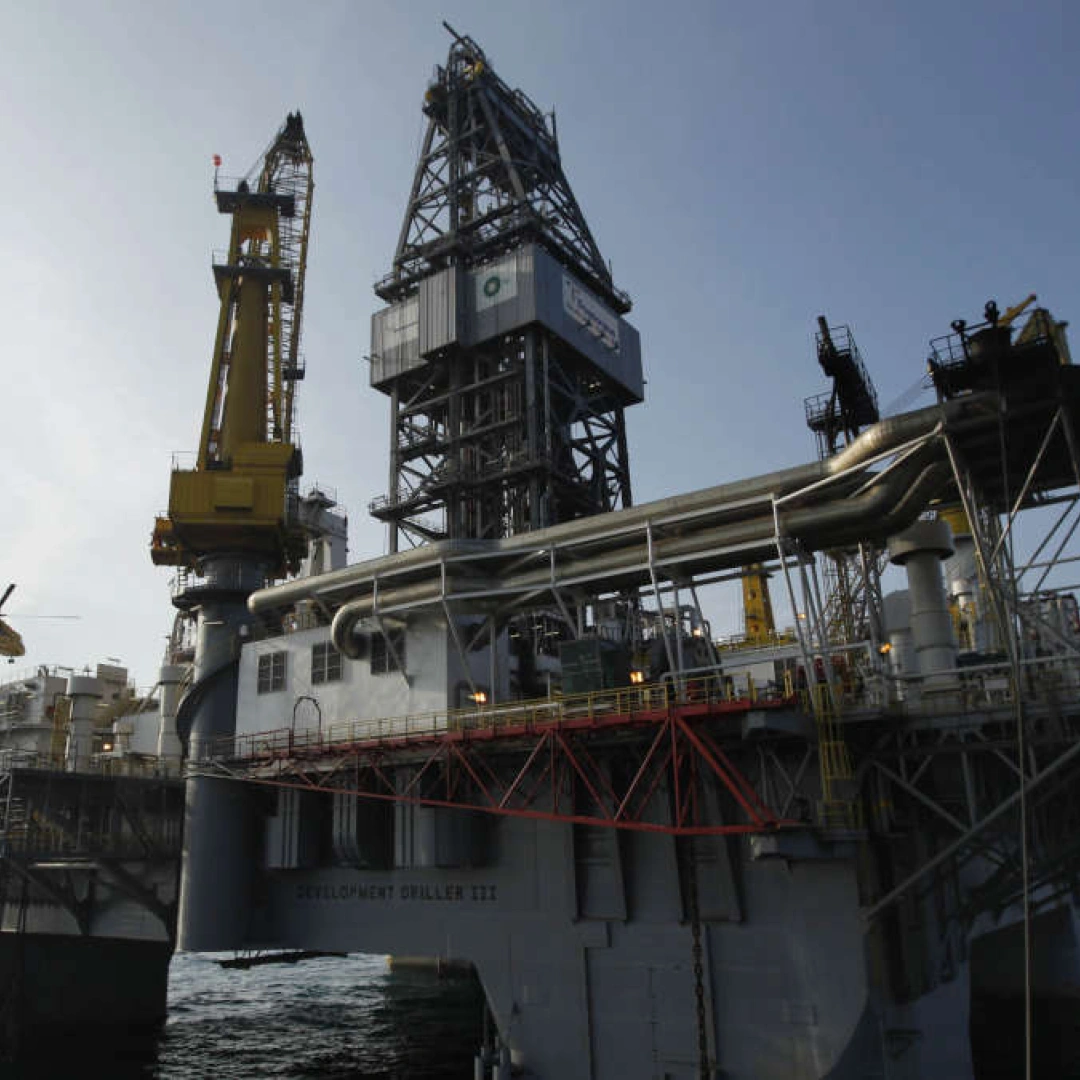
Egypt has just announced the discovery of four new oil wells in the Western Desert, reinforcing its strategy to boost domestic hydrocarbon production and reduce energy imports. This news comes amid a flurry of drilling and tenders in Cairo aimed at consolidating its role as a regional energy hub in North Africa.
A New Step in the Western Desert
The four wells were identified in the Western Desert, one of Egypt’s main oil basins, already home to numerous concessions operated by major and national companies. According to authorities, these exploratory wells have been successful and are being connected to the existing production network, which should allow for a relatively rapid ramp-up.
- Additional capacity estimated at approximately 4,500 barrels of crude oil per day and 2.6 million cubic feet of gas.
- One of the wells located in the Abu Sannan area stands out with over 1,300 barrels per day during testing.
An asset for Egyptian energy security
This discovery comes at a time when Egypt is facing a decline in its gas production and an increase in its imports, which is putting pressure on the balance of payments and public finances. The addition of new volumes of crude oil and gas helps to limit the energy bill and improve security of supply, particularly for the electricity sector and industry.
- The Ministry of Petroleum has launched a vast program to drill 480 new exploration wells by 2030, representing an investment of over USD 5.7 billion.
- The objective is to stabilize and then increase total production in order to preserve LNG and petroleum product export capacity.
A strong signal to investors
The discovery of these wells sends a positive signal to international companies already operating in the country or considering investing there. It confirms the still largely untapped potential of the Western Desert and the effectiveness of new exploration technologies (advanced seismic data, artificial intelligence, etc.) deployed by operators.
Companies such as Khalda, Tharwa Petroleum, and Borg Al-Arab are among the players involved in recent drilling campaigns. The strengthening of the contractual framework and the increase in tenders, particularly in the Mediterranean and the Red Sea, complement this dynamic.
Geopolitical and Regional Stakes
By consolidating its production, Egypt seeks to maintain its position as an energy power in the Eastern Mediterranean and North Africa, in the face of competition from countries like Libya and Algeria. More abundant and stable production would also strengthen its role as a platform for liquefying and re-exporting gas to Europe, in the context of the reconfiguration of Ukrainian energy flows following the crisis.
- The new discoveries are combined with major offshore projects (Zohr, West Nile Delta, partnerships with BP, Eni, Chevron, etc.).
- This strategy allows the country to better leverage its resources while remaining a key player in regional energy trade.
What impact for North Africa?
At the regional level, these discoveries confirm the dynamism of exploration in North Africa, where several countries are relying on oil and gas to finance their economic transitions. For the markets, the arrival of new Egyptian volumes contributes to the diversification of supply sources, while also highlighting the central role of the Maghreb and the Middle East in the global energy landscape.
Egypt’s growing influence can inspire other African countries to modernize their regulatory and fiscal frameworks to attract capital.