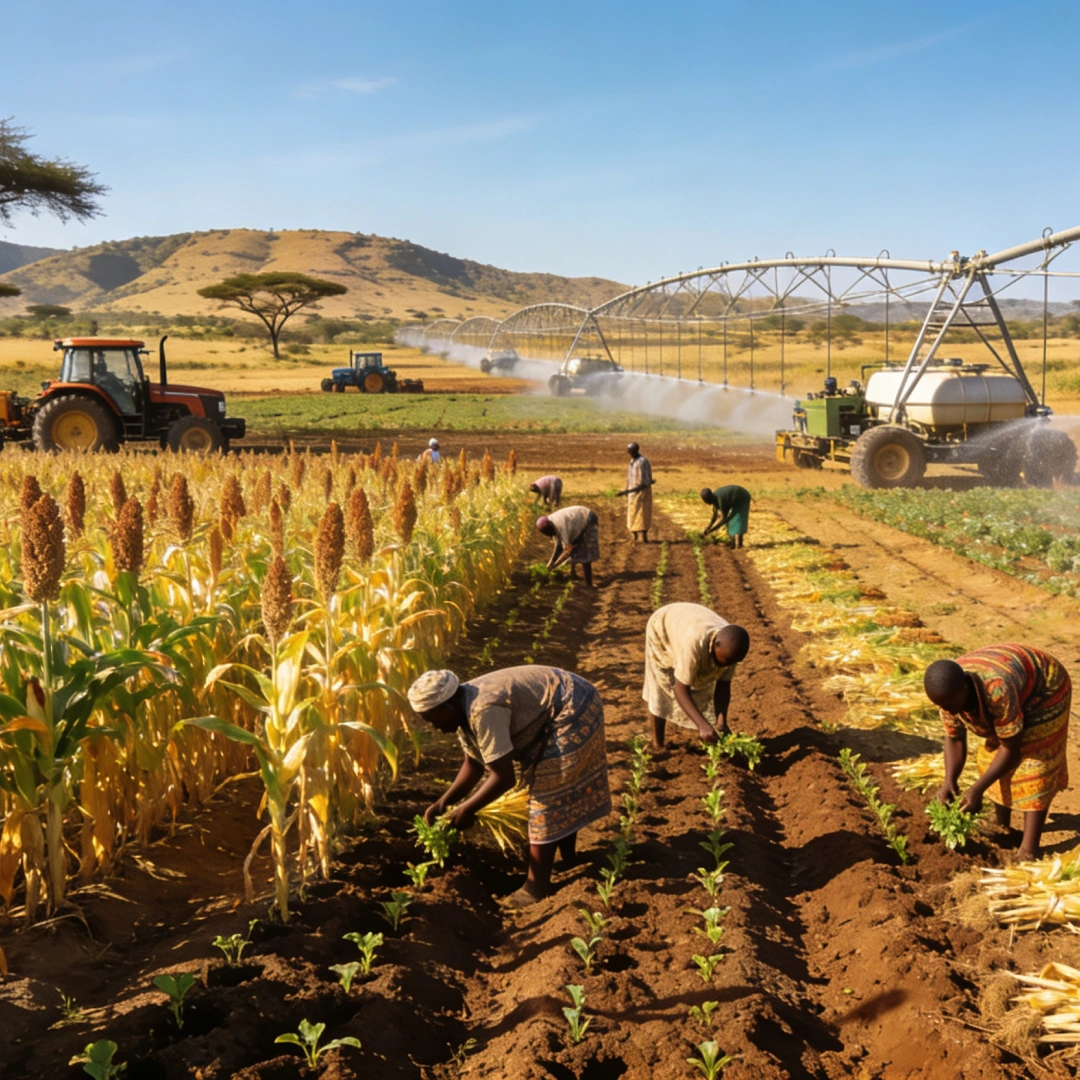
Nigeria has just taken another step in its agricultural transformation strategy with the World Bank’s approval of $500 million in funding to support the country’s agricultural value chains. This funding is intended to help improve the productivity of smallholder farmers, strengthen the links between production, processing, and markets, and boost food security.
Major Support for Nigerian Agriculture
This new funding is part of the Nigeria Sustainable Agricultural Value Chains for Growth (AGROW) project, which aims to modernize the agricultural sector and create more jobs. According to published information, the program will cover several components, including strengthening agricultural research, improving access to climate-resilient seeds, and establishing a digital registry of farms and farmers.
The initiative is expected to benefit up to one million smallholder farmers and attract an additional $220 million in private investment in agribusiness. It spans six years, from 2026 to 2032, demonstrating a commitment to long-term agricultural reform.
A lever against food insecurity
Nigeria faces significant pressure on its food system, with growing needs for local production and a persistent reliance on imports. In this context, World Bank support appears to be an important tool for improving yields, strengthening climate resilience, and mitigating income losses for farmers.
The project also aims to improve seed and fertilizer regulatory systems, strengthen the supply of basic seeds, and promote greater private sector participation. Ultimately, these measures can help make agricultural value chains more competitive and inclusive.
A Strategy Aligned with Agro-Industrial Transformation
This new funding stream complements other initiatives already underway in the country, including special agro-industrial processing zones and several programs aimed at modernizing agricultural infrastructure. The objective is clear: to bring processing closer to production areas in order to reduce post-harvest losses and add more value to local products.
Beyond the figures, this project reflects a broader trend: Nigeria is seeking to make agriculture a true engine of growth, capable of supporting employment, food security, and private investment. In an economy facing food price pressures, this type of initiative is strategic for stabilizing supply and strengthening food sovereignty.