Ghana is undertaking a major reform of its mining framework to capture a larger share of gold revenue, amid high debt and record gold prices. Africa’s leading gold producer, the country aims to correct a model deemed too favorable to multinationals, which leave the state with only a limited portion of the value created.
A New Code to Capture Gold Revenue
The government is preparing a draft law to be submitted to Parliament by March 2026, with a clear objective: to increase the share of public revenue derived from gold without stifling investment. According to the Minerals Commission, the current policy dates back to 2014 and no longer reflects either current price levels or the country’s budgetary constraints.
Authorities estimate that Ghana captures only about 10% of the total value generated by the sector (royalties, dividends, taxes), while gold prices have skyrocketed to over $5,000 an ounce. The reform therefore aims to “regain control” of a strategic resource at the heart of the economy and external balances.
Increased royalties and the end of overly protective agreements
The core of the project focuses on two key areas:
- Significantly increased mining royalties: these would rise from the current 3-5% to a range of 9-12%, adjusted according to global gold prices. The idea is to make the system more progressive: the higher the prices, the larger the state’s share.
- Reassessment of stability agreements: these agreements froze certain taxes and fiscal conditions for 5 to 15 years in exchange for substantial investments (often exceeding $500 million). Accra believes that some operators have not fulfilled all their commitments, justifying a review of these “overly restrictive” regulations that favor the companies.
- In parallel, the proposed reform is part of a broader movement: stricter mine audits, shorter licensing periods, and mandatory direct profit-sharing with local communities.
A Choice Under Budgetary Pressure
This offensive on mining revenue comes at a time when Ghana is experiencing significant fiscal constraints: at the end of 2025, the country was among the largest African debtors to the IMF, with over $4 billion in arrears and an ongoing bailout program. Increasing gold revenue is therefore a way to:
- Reduce dependence on external debt.
- Better finance public services and investments.
- Improve debt sustainability.
For the government, allowing too large a share of mining revenue to slip away is no longer compatible with the current budgetary situation.
Mining Companies’ Concerns
The Ghana Chamber of Mines and several international groups (Newmont, AngloGold Ashanti, Gold Fields) are raising the alarm. According to them:
- Doubling royalties and eliminating stability agreements risks harming Ghana’s competitiveness compared to neighboring countries with more flexible regimes.
- Companies are already subject to a heavy burden: a 5% royalty on gross revenue, a 3% tax on “growth and sustainability,” a 10% free state contribution, and a 35% corporate tax.
- Industrialists are advocating for a “happy medium”: yes to a reasonable increase in public revenue, but without a “draconian approach” that would divert capital to other gold-producing jurisdictions.
Taking back control of the artisanal sector and combating “galamsey” (smuggling)
The upcoming reform is not limited to large industrial groups. The government also wants to regain control of the artisanal and informal sector, which is estimated to represent between a third and half of gold production.
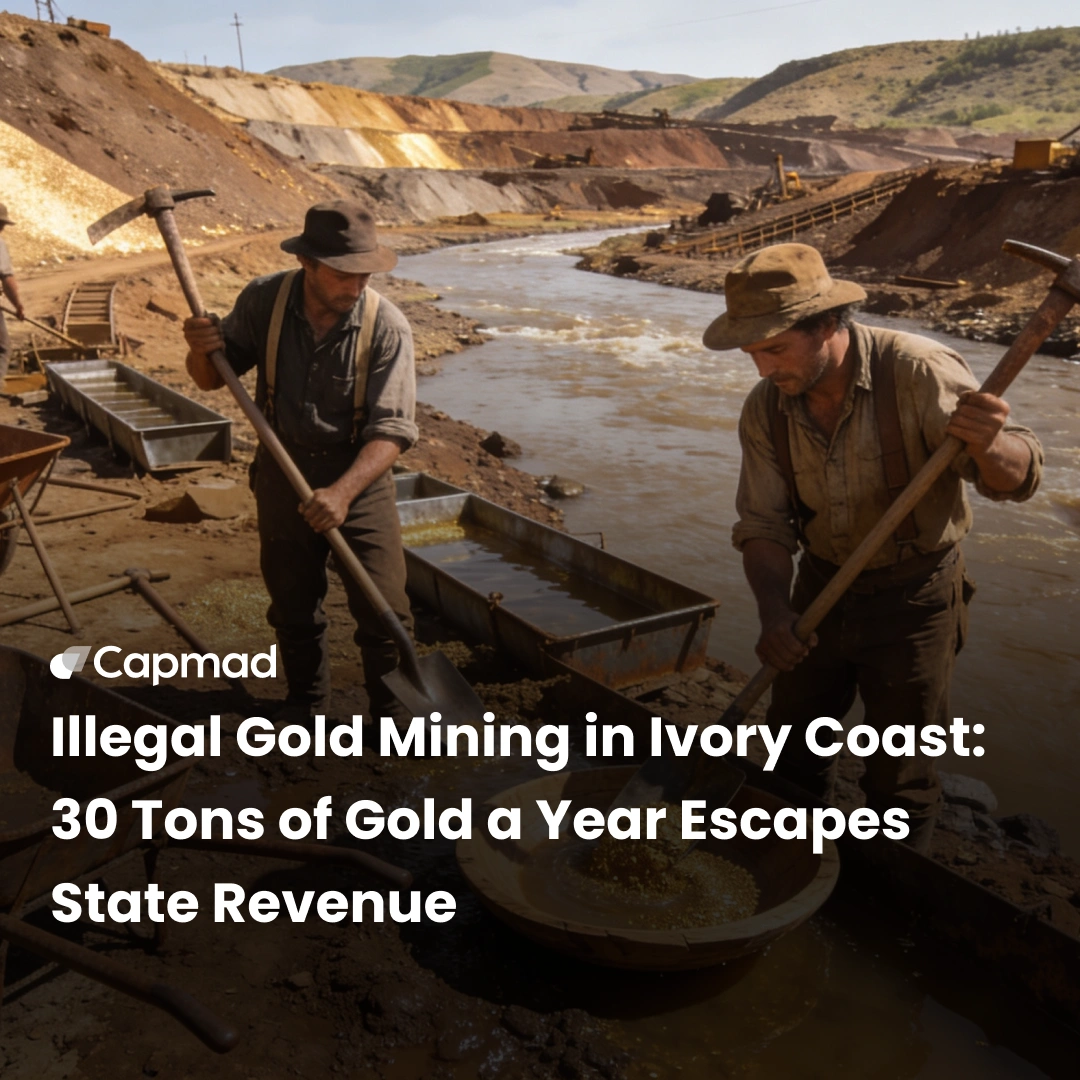
In April, Accra banned foreign participation in the artisanal gold market and granted a purchasing monopoly to a new public entity, the Ghana Gold Board (GoldBod), to combat smuggling and improve traceability. Illegal mining activities (“galamsey”) are accused of degrading the environment, dispossessing local communities, and depriving the state of substantial revenue.
The challenge is twofold: to recover tax revenue and to ease social tensions related to pollution and land grabbing.
A delicate balance between sovereignty and attractiveness
With this revision of mining laws, Ghana is following the path laid by other African countries (Mali, Tanzania, DRC) that have strengthened their regulations to better capitalize on the rise in strategic raw materials. However, the line is a fine one:
- Too little reform, and the state continues to capture only a marginal share of the revenue.
- Too much tax pressure at once, and the risk is that investment will be stifled, projects canceled, and jobs lost.
The success of this reform will depend on the government’s ability to calibrate the new tax parameters, to engage in dialogue with operators, and to prove that the additional revenue will effectively be transformed into infrastructure, public services, and visible benefits for the populations of mining areas.