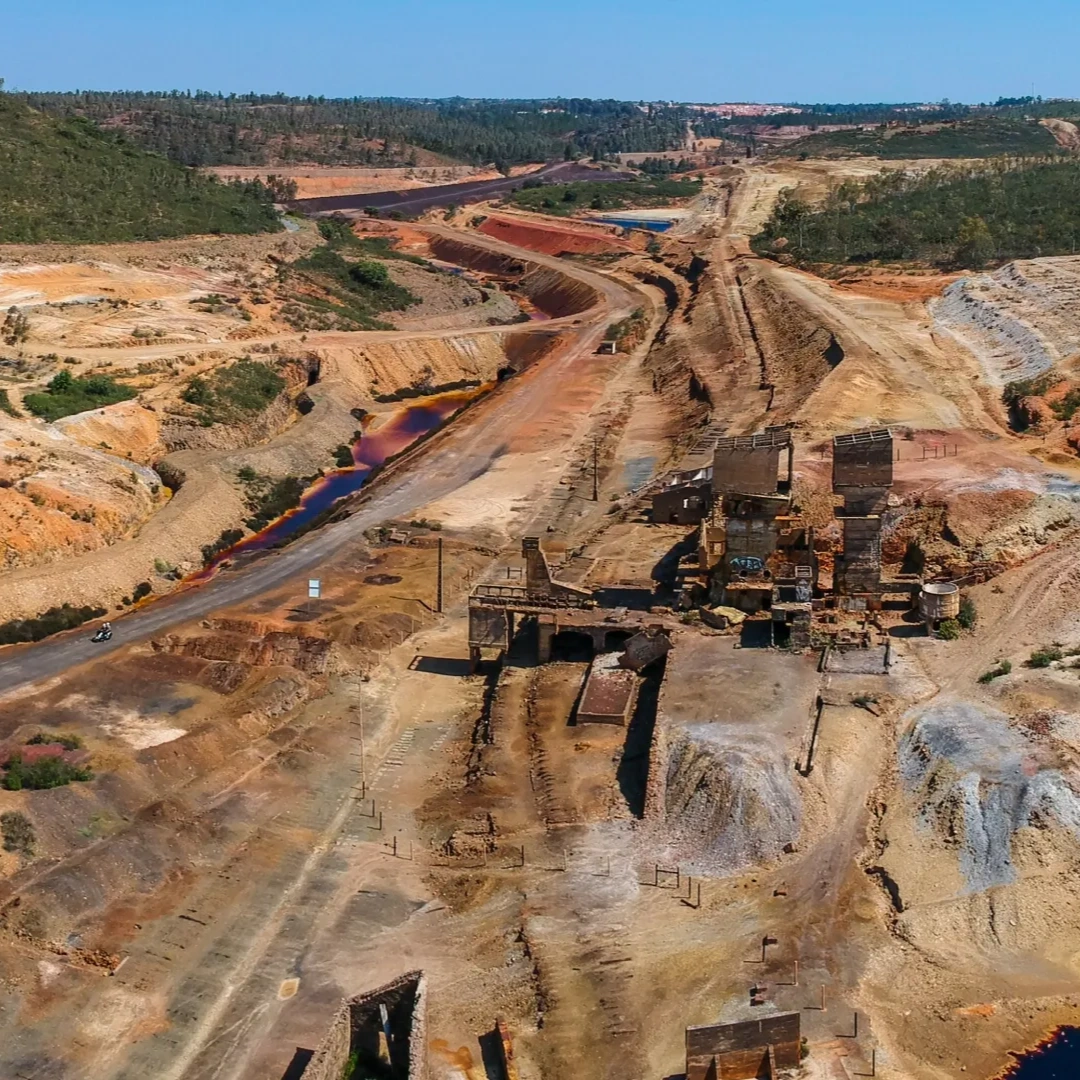
On 15 June 2026, the Inspectorate General of Mines confirmed that Kinshasa is preparing a wide-ranging reform of the sector, including the creation of a dedicated unit to police critical minerals and a targeted revision of the 2018 Mining Code to capture more value from cobalt, copper and other strategic metals.Inspector General of Mines Rafael Kabengele described the new entity as an instrument designed to “clean up the entire mining sector in the DR Congo” by tightening governance, transparency and traceability for critical minerals.
The move comes as global demand for minerals used in batteries and green technologies reshapes the geopolitics of raw materials and places the DRC at the core of industrial strategies in major economies. Recent research on electric-vehicle supply chains notes that the concentration of cobalt extraction in the DRC creates major social and environmental risks but also gives the country strategic leverage in the energy transition. The announced reform is therefore playing out as much in Kinshasa as in the capitals that buy its minerals.
“The country that controls the DRC’s cobalt, copper and tantalum controls part of the industrial architecture of the coming decades.” — Quoted in a mining-policy study, arXiv
A 2018 Mining Code already under strain
The reform now taking shape does not start from scratch. It builds on – and tests – the 2018 revised Mining Code, which had already raised the cost of resources for operators.Budget documents for the Democratic Republic of Congo show that the 2018 revision increased royalties on several mineral categories and introduced a heavier fiscal regime for substances classified as strategic.The revaluation of royalty rates under the 2018 reform led to increases for certain metals, while strategic minerals such as cobalt and coltan are subject to a rate of 10%, compared with a general rate of 3.5% applied to base metals.
A few months later, this fiscal tightening was followed by a strong industrial-policy signal.Ministerial Decree no. 18/042 of 24 November 2018, issued by the Ministry of Mines, declared cobalt, germanium and columbo-tantalite to be “strategic mineral substances”, bringing them under a reinforced Mining Code regime because of their role in information technologies, defence and the energy transition. The message to markets was clear: these critical minerals are no longer simple commodities but instruments of economic power.
Governance, traceability and the 0.3% levy in the spotlight
The latest reform drive is less about rewriting the Code than about tightening governance around critical-mineral flows and revenue redistribution at the local level.In March 2026, the government unveiled a draft decree redefining the status of the Centre d’Expertise, d’Évaluation et de Certification (CEEC), which is to become a full-fledged certification authority, tasked not only with analysing minerals but also with tracing their path from extraction to export in order to guarantee their legality. The control unit announced by the Inspectorate General of Mines is part of the same push to recentralise oversight functions.
This renewed state grip coincides with challenges to another cornerstone of the 2018 reform: the 0.3% share of mining companies’ turnover earmarked for community development.In March 2026, civil-society organisations denounced a planned overhaul of this levy as “counter-productive”, arguing that stronger institutional control could weaken the local ownership of the funds and reduce their impact in communities affected by mining.The levy, currently set at 0.3% of turnover and enshrined in the 2018 Code, is one of the few formal channels through which mining revenues are directly redistributed to communities.
By simultaneously strengthening mineral traceability and public control over financial flows, the reform seeks to answer international criticism over social and environmental risks. It also aims to reassure partners about supply-chain reliability.Studies on critical minerals stress that credible sustainability commitments are becoming an increasingly important criterion for investors, particularly for Congolese cobalt, which is often associated with child labour and hazardous working conditions.
Geopolitical pressure and fiscal trade-offs
The trajectory of reform is shaped not only by the balance of power between the state and mining companies, but also by competition among major powers that rely on Congolese minerals.In June 2026, a strategic accord on critical minerals was brought to the fore in talks between Kinshasa and Washington, including the reservation of certain deposits and exploration areas for US companies and commitments to improve traceability and transparency in the governance of strategic minerals, according to Mines Minister Louis Watum Kabamba. The Inspectorate General of Mines presents the creation of the control unit as a tool to better frame such partnerships and curb practices that run counter to good governance amid intensifying competition between Asian, Western and regional investors.
This geopolitical reconfiguration is unfolding against the backdrop of continued debate over how balanced the 2018 Code’s fiscal regime really is. Specialised analysis of cobalt governance notes that the 2018 revision significantly increased the weight of royalties, especially on copper and cobalt, in order to raise the state’s share of mining rents.Legal commentary highlights that around 10% of royalty revenues are allocated to the Fonds minier pour les générations futures (Mining Fund for Future Generations), a key vehicle for intergenerational sharing of mining rents that the current reform could reinforce rather than weaken.
Next steps: balancing rent capture and social legitimacy
The sequence opened by the announcement of the critical-minerals control unit, the overhaul of the CEEC and the debate over the 0.3% community levy forces the Congolese government to make a strategic choice: double down on centralisation and state rent capture, or consolidate mechanisms that root mining governance in local territories.Civil-society organisations are calling for inclusive and transparent consultations to redefine the contours of the community levy and prevent it from drifting away from its local-development mandate.Analytical work on DRC mining revenues underlines that the legitimacy of the fiscal regime depends as much on predictability for investors as on citizens’ perception of tangible benefits from the rents.
In the near term, forthcoming regulations – the decree on the CEEC, the detailed framework for the control unit and any revision of the 0.3% levy modalities – will serve as crucial tests of the DRC’s ability to align geopolitical ambition, fiscal discipline and social acceptance of its mining model.Mining authorities see this phase as an opportunity to consolidate a framework that reflects new power dynamics around critical minerals without fully reopening the political compromise of the 2018 Code.
✍️ Want to contribute a high-value article?
Contact us for a guest post : [email protected]
Write to the editorial team