Targeted French Support for Cities, Justice, and Social Safety Nets
Integrated into the 2026 supplementary budget law, this funding is intended to support municipalities, modernize the justice system, and strengthen social safety nets in a context of significant budgetary constraints.
France is allocating €57 million to support municipal urban planning, local justice, and social assistance in Madagascar as part of the 2026 supplementary budget law, a key balancing act between budgetary consolidation and increasing social pressures.
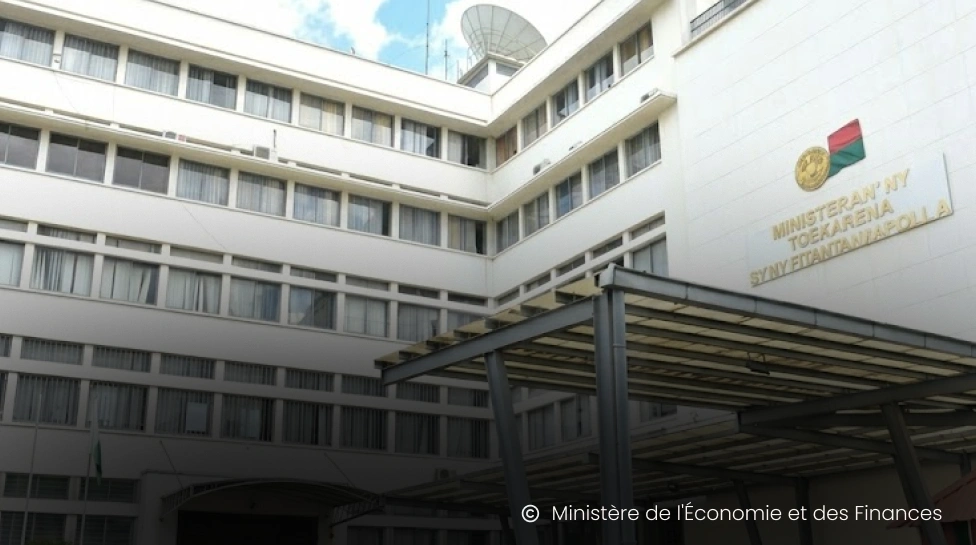
On June 19, 2026, the Ministry of Economy and Finance, led by Rindra Hasimbelo Rabarinirinarison, presented a supplementary budget law (LFR) for 2026 that incorporates new French support of €57 million intended to finance urban development, justice, and social welfare projects in Madagascar. The 2026 LFR formalizes this external support within the year’s budget framework, targeting urban communities, judicial infrastructure, and social protection programs.
The Ministry of Economy and Finance presents this €57 million as a lever to reconcile budgetary discipline with social expectations following recent climate and inflationary shocks, in a context where budgetary space remains limited and the demand for urban public services is increasing. The priorities outlined in the initial 2026 budget bill already focused on investment, social protection, and greater transparency in public management, and the revised budget law (LFR) reallocates funds to remain aligned with these priorities.
According to the presentation of the 2026 LFR, the French allocation of €57 million is intended to support three areas of public policy: urban planning and development projects for municipalities, investments in the justice system—particularly local courts—and the strengthening of targeted social assistance programs. The Ministry of Population and Solidarity emphasizes that the scaling up of non-contributory cash transfer programs depends on external funding and the modernization of the targeting system, supported by social protection projects.