On 12 June 2026, SpaceX made its debut on the Nasdaq and raised around $75 billion in what is described as the largest initial public offering in history, based on an opening price of $150 per share and a closing valuation above $ 2.1 trillion . In an analysis published on 14 June, a commentator argues that this transaction marks a turning point where Elon Musk’s vision for Mars, artificial intelligence and global connectivity weighs almost as much as the tangible assets of SpaceX and Starlink.
“The SpaceX case crystallises a new era in which valuation rests less on existing assets than on the ability to narrate a totalising telecoms future.” — Op‑ed, Financial Afrik
A record IPO driven by Starlink and space AI
Before the first trading session, the IPO terms indicated that SpaceX would sell about 555.6 million shares at a fixed price of $135 , raising close to $75 billion and implying a fully diluted valuation of roughly $1.77 trillion , setting an all‑time record for an IPO. Commentators note that this valuation bundles not only the launch business and the Starlink constellation, but also the xAI artificial intelligence subsidiary and scenarios of Martian colonisation that go far beyond most investors’ forecast horizon. This gap fuels the core question: is this the consecration of unmatched telecom assets, or the triumph of an exceptional technological narrative?
Market analysts stress that the key IPO numbers — proceeds, price, trading volume — are measurable, but that most of the valuation rests on very ambitious assumptions around AI and space ventures. This mix of verifiable data and radical projections turns the IPO into a global referendum on Musk’s ability to turn Starlink into the backbone of the internet and AI. For African telecoms, the issue is less whether the valuation is “right” in absolute terms than how this signal reshapes the balance between satellite and terrestrial networks.
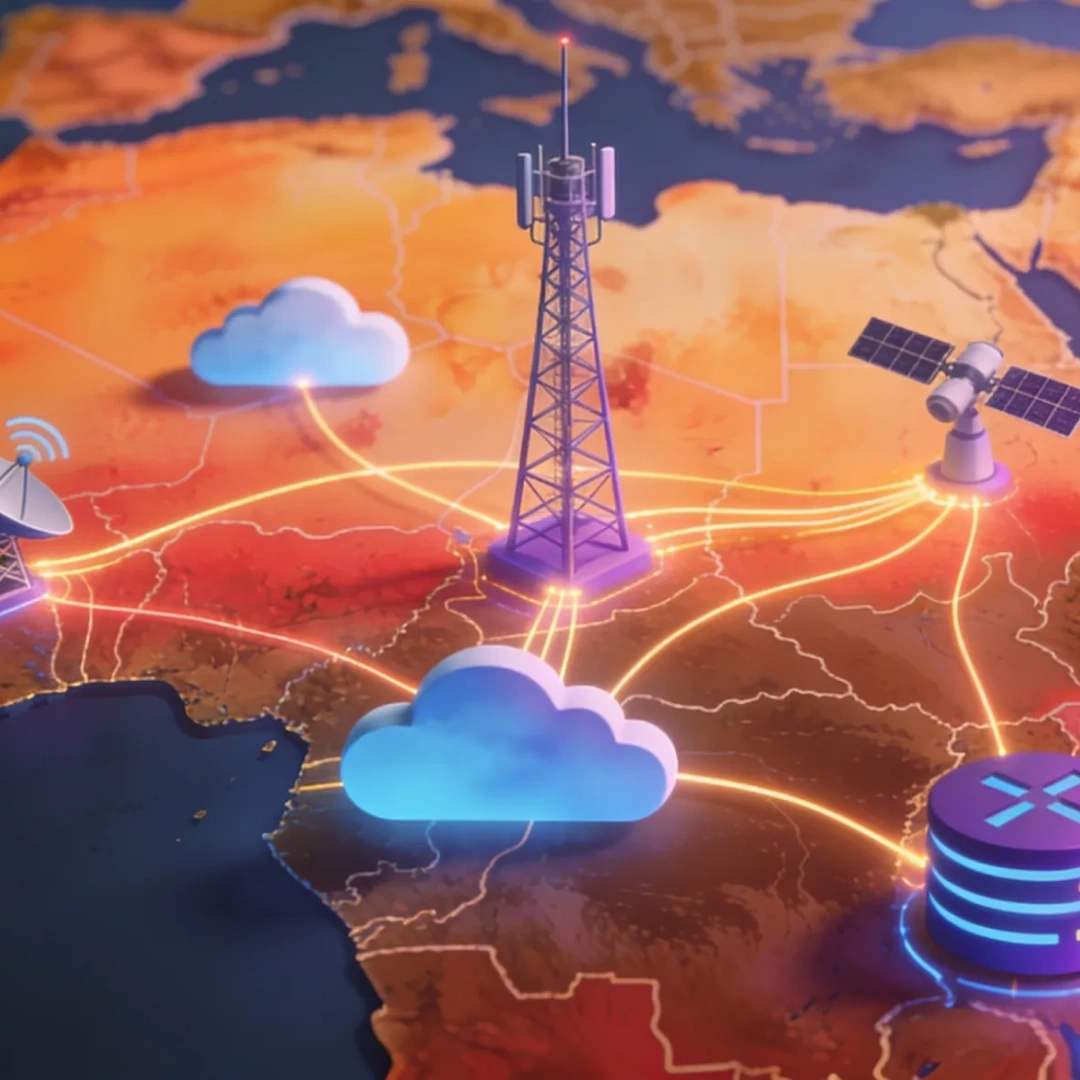
Starlink as a new layer of Africa’s telecoms stack
Starlink already provides satellite internet access in a large number of countries, making its constellation one of the densest in telecoms history. In December 2025, Airtel Africa announced an agreement with SpaceX to deploy Starlink’s Direct‑to‑Cell satellite connectivity across its 14 African markets, then serving close to 174 million mobile customers, with the aim of extending voice, SMS and data coverage into rural and underserved areas. This deal positions Starlink not merely as a niche access provider but as a core infrastructure block integrated into major African mobile networks.
A few months earlier, Vodacom, South Africa’s largest mobile operator, signed a partnership to integrate Starlink’s satellite technology into its network and resell its equipment and services to business customers across the continent, in order to deliver high‑speed, low‑latency connectivity. Industry observers note that these alliances with Airtel Africa and Vodacom are part of a broader strategy in which Starlink seeks to complement — rather than sidestep — incumbent operators in emerging markets. In the wake of the IPO, SpaceX’s ability to finance a faster expansion of Starlink reinforces the shift of satellite from backup solution to critical node in the telecoms value chain.
Narrative vs. assets: how should Africa read the valuation?
The 14 June op‑ed underlines that SpaceX’s valuation aggregates very tangible assets — launch backlogs, satellite fleet, commercial agreements — and a far more speculative layer linked to space‑based AI and Martian colonies. In an earlier commentary, analysts had already argued that hopes of a valuation near $1.75 trillion rested more on Musk’s imagination than on current cash flows from Starlink and launch services. This tension between assets and narrative is central for African investors assessing their exposure to the Starlink ecosystem.
SpaceX’s operating leadership highlights the group’s diversification, now combining a dominant launch business, a global satellite network and a rapidly expanding AI arm. Analyses of the prospectus, however, emphasise that the model remains extremely capital‑intensive, with substantial losses and heavy investment needs, making the path to durable profitability uncertain. Seen from Africa, where listed operators are often punished by the market for CAPEX deemed too high, this market tolerance for SpaceX’s risk level raises questions about a possible perception bias between assets in the Global North and those in the Global South.
Three filters to assess the IPO’s impact on African telecoms
Several analytical filters emerge to gauge the IPO’s ripple effects across the regional telecoms ecosystem:
- Starlink’s investment capacity in African infrastructure. The inflow of capital gives SpaceX greater room to deploy additional satellites, ground stations and Direct‑to‑Cell products on the continent. The key question for regulators and local operators is whether this capacity will translate into co‑investment offers (infrastructure sharing, satellite backbones for rural backhaul) or into a faster move towards a disintermediation model.
- Bargaining power of MNOs facing an over‑capitalised supplier. Partnerships with Airtel Africa and Vodacom point to a complementary approach. But in a scenario where Starlink controls a growing share of international links and backup connectivity, pricing and contractual power could shift, especially in markets where regulation is still fragile.
- Signal sent to markets on the valuation of connectivity assets. When LEO satellites loaded with promises of AI and space colonisation are valued in the trillions, while African fibre and mobile networks struggle to convince investors, questions arise over how fair the “story premium” is. That asymmetry can shape the cost of capital for local operators and steer funds towards assets perceived as more scalable by global markets.
A precedent for future African telecoms champions?
Airtel Africa’s Direct‑to‑Cell agreement illustrates a potential trajectory in which an African player leverages a global satellite infrastructure to extend coverage without shouldering space‑segment investments alone. Executives at the operator describe this cooperation as a way to accelerate digital inclusion by combining a local subscriber base with orbital technology. If this model scales, the real question is no longer just whether SpaceX is overvalued, but whether markets will be willing to finance future “mini‑SpaceX” players in Africa — groups combining connectivity, regional data centres and capital‑heavy digital services.
Competitors such as Eutelsat OneWeb, already active in satellite connectivity covering Africa among other regions, show that a more sober narrative, centred on capacity, reliability and government use cases, can also find its place. Investments in very‑high‑throughput satellites targeting Europe and North Africa illustrate an approach where valuation is more tightly anchored to institutional contracts and clearly defined use cases than to promises of space colonies. The SpaceX IPO nevertheless pushes all these actors to position themselves against a market benchmark that over‑weights the potential of a telecoms‑AI‑space convergence.
What signal really matters?
The 14 June op‑ed cautions against the temptation to mechanically transpose the SpaceX valuation framework to any telecom asset, particularly in emerging markets where regulation, purchasing power and political risk remain decisive. Other analyses converge on the idea that this is less a model to emulate than an upper bound of what a powerful technological narrative, highly concentrated governance and intense AI growth appetite can achieve. Taken together, these readings invite African investors to disentangle three layers: the value of existing telecom cash flows, the option premium on new use cases (Direct‑to‑Cell, space‑based IoT, orbital edge computing) and pure narrative‑driven speculation.
Over the next few years, the key test will be twofold: Starlink’s ability to demonstrate, in markets such as Africa, that recurring revenues and partnerships with MNOs justify a meaningful share of today’s valuation; and the emergence — or not — of regional champions able to build a credible technology story from local connectivity assets. If these two dynamics converge, SpaceX will have served as a full‑scale laboratory for a new generation of African telecoms models. If, instead, cash flows fall short of expectations, the June 2026 IPO may retrospectively look like the peak of a cycle in which narrative briefly overshadowed assets.
✍️ Want to contribute a high-value article?
Contact us for a guest post : [email protected]
Write to the editorial team