The central question for investors in Eritrea today is no longer whether the country has mining potential, but how its copper, zinc, gold and potash resources can be turned into stable foreign-currency flows without amplifying political and reputational risks.
“The challenge is not the absence of resources, but the ability to attract partners willing to accept local political constraints while meeting their own ESG requirements.” — Interpretation based on technical publications on the Bisha mine and the Asmara and Colluli projects
A core of industrial projects driving the sector’s rise
The rise of Eritrea’s mining sector rests first on a small number of industrial-scale projects built around volcanogenic massive sulphide deposits and a vast potash basin.
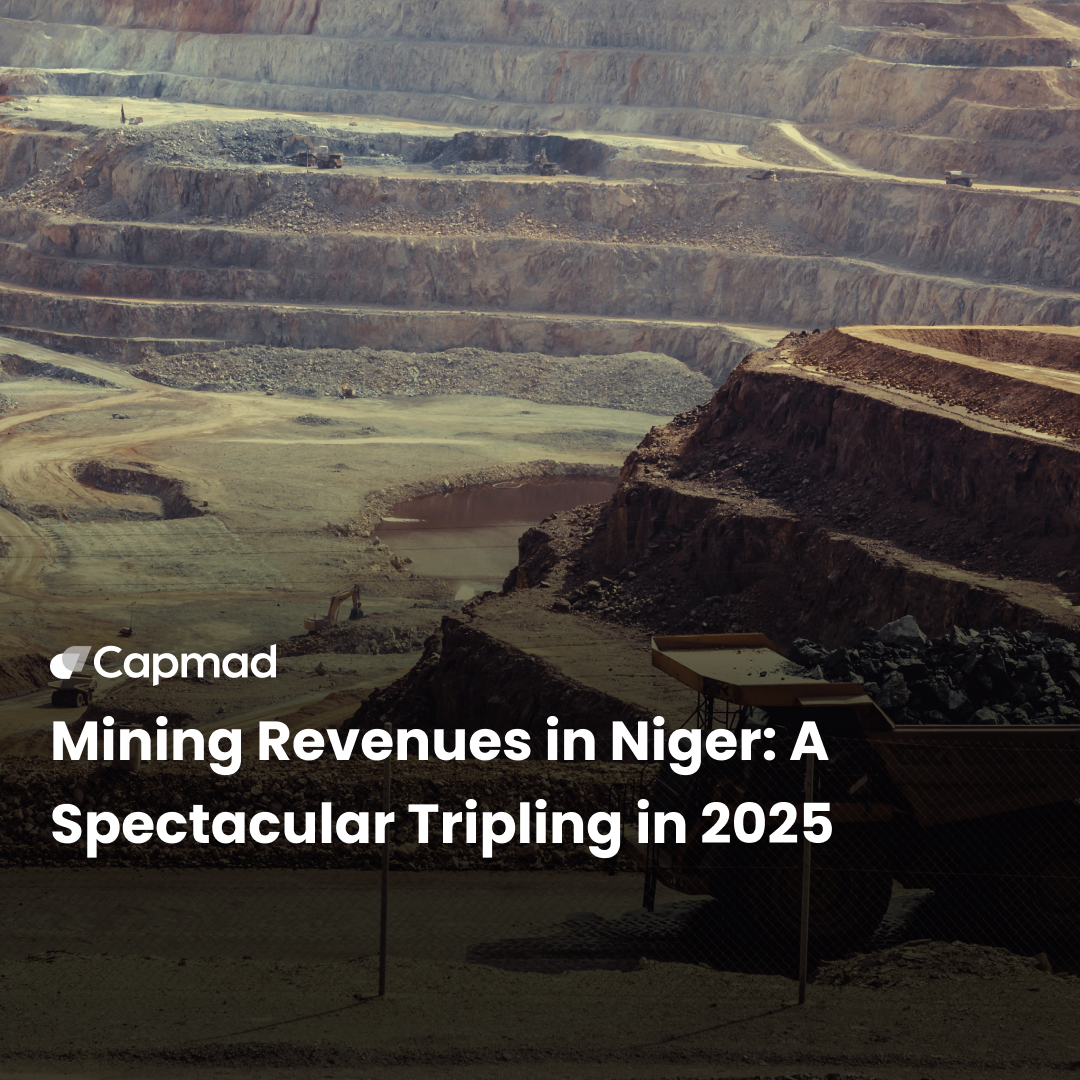
The Bisha project, located west of Asmara, is an open-pit mine producing copper, zinc, gold and silver, with an annual processing capacity of approximately 2 to 2.5 million tonnes of polymetallic ore and published proven and probable reserves including 3.09 million tonnes of zinc and 800,000 tonnes of copper as of 2023.
Chinese group Zijin Mining, which owns Bisha via Bisha Mining Share Company, presents the mine as one of the largest zinc producers in Eritrea, with an annual processing capacity of approximately 2 to 2. 4 million tonnes of ore, and reports that in 2024 it started waste-stripping and auxiliary infrastructure works for the new Hambok open pit, with ore extraction scheduled to begin in the first quarter of 2026.
Around the capital, the Asmara project further consolidates this polymetallic core.
The Asmara project is described as an advanced-stage polymetallic copper–zinc–gold–silver project integrating several deposits near Asmara, with a phased development plan including an initial flotation plant designed to process approximately 1.5 to 2 million tonnes of ore per year, with capacity increasing depending on development phases.
Technical studies indicate that the overall Asmara complex aggregates six volcanogenic massive sulphide deposits of copper, zinc, gold and silver, structured in a dedicated company with the participation of Eritrean National Mining Corporation (ENAMCO), making it a second pillar of the sector after Bisha.
This concentration of value in a few assets explains why every capacity expansion or change in ownership translates directly into inflection points for the sector’s outlook.
Colluli: potash as a long-term macro bet
Beyond base metals, the sector’s rise also hinges on fertilisers, through the Colluli potash project in the Danakil depression.
Australian company Danakali completed in 2023 the sale of its 50% stake in Colluli Mining Share Company, owner of the Colluli project, to a Chinese construction and infrastructure group, ending thirteen years of joint development with ENAMCO.
A diaspora radio outlet relaying elements of the partnership has portrayed Colluli as a project that could eventually generate up to 50% of the country’s foreign-currency earnings and sustain mining operations for more than 200 years, feeding the perception of a “macro asset” rather than a conventional mine.
Specialised analyses of Eritrea’s mining policy note that Colluli, initially structured as a 50–50 joint venture between Danakali and ENAMCO, fits into a strategy where the state retains significant equity in projects, combining foreign capital with sovereign control over strategic revenue streams.
Taken together with the base metals output of Bisha and Asmara, this bet on potash could, should the industrial phases materialise, turn a concentrated industry into a genuine backbone of Eritrea’s balance of payments.
Risk–return balance: state centrality and cautious capital
The sector’s rise cannot be separated from Eritrea’s political configuration, marked by tight state control of the economy, prolonged national service and recurring human-rights criticism.
A 2024 human-rights report describes national service as compulsory for all Eritreans and often extended well beyond the 18-month legal limit, and documents severe abuses, fuelling ESG concerns among many institutional investors.
Studies on Eritrea’s mining policy recall that more than 30 international mining and exploration companies entered the country from the mid-1990s, before several Western groups exited in the second half of the 2010s, partly in response to past international sanctions and controversies over labour conditions.
A civil suit filed in Canada against the former operator of Bisha alleged forced labour and complicity in serious human-rights violations, increasing legal and reputational pressure around participation in mining projects in Eritrea.
Taken together, these signals contribute to a segmentation of investors, with groups willing to operate in a tightly controlled political environment — often from Asia or other emerging economies — increasingly taking over from Western actors more constrained by ESG commitments. The growing role of companies such as Zijin at Bisha illustrates this shift in capital flows towards operators less exposed to Western advocacy campaigns.
For Eritrean authorities, this has a dual effect: it preserves the ability to raise capital for strategic projects but reduces partner diversification, concentrating geopolitical and market risk on a small set of actors.
Infrastructure, power and economic spillovers
A key issue for the next phase of growth is whether the mining sector can pull up infrastructure — power, roads, logistics — and connect to a domestic supplier base.
Synthesis work on economic spillovers suggests that large mining joint ventures, particularly around Bisha, have contributed to financing transport and energy infrastructure and to fiscal transfers to the state, although detailed transparency on the allocation of these revenues remains limited.
The 2024 United Nations results report on Eritrea highlights public investment in roads, electricity and social services under the country’s self-reliant development model, but notes that the sustainability of these efforts depends on stable revenue sources, with mining income forming a growing pillar.
This mines–infrastructure link also shows up in how energy projects are framed, as authorities seek more reliable power for urban centres and industrial zones to lock in greater domestic value addition.
What trajectory over the next decade?
Taken together, several scenarios emerge for Eritrea’s mining sector over the coming decade.
If the Bisha expansion through the Hambok pit proceeds as planned and polymetallic reserves are mined over time, the operation should remain a central contributor to export revenues beyond 2026, even with a production profile shifting progressively towards zinc and away from gold. The stepwise commissioning of the Asmara complex, moving from 2 to 4 million tonnes processed annually in its target configuration, would provide a second significant stream of copper and zinc.
Colluli’s ability to become the anchor of a major potash hub will depend on the realisation of industrial investments announced by the new shareholders and on securing multi-decade off-take agreements to monetise a resource presented as exploitable for more than 200 years. Sector analyses stress that the equation for the coming years hinges as much on governance — labour standards, fiscal sharing, transparency — as on geology, with institutional investors increasingly integrating these parameters into their decisions.
A measurable change in national service policy, verifiable improvement in revenue transparency for mining, or the entry of new multilateral partners in financing mining-related infrastructure would be strong signals validating a controlled scale-up trajectory. Conversely, further political tightening or new international disputes over working conditions would directly undermine the country’s ability to convert mining potential into inclusive growth.
Key takeaways
- The sector’s rise rests on a few polymetallic projects (Bisha, Asmara) and a very long-term potash bet at Colluli.
- The state, through ENAMCO, remains at the core of the model, with joint ventures combining foreign capital and sovereign control over foreign-currency flows.
- The political setting — prolonged conscription and human-rights criticism — is gradually channelling capital towards operators less constrained by Western ESG standards.
- Spillovers into infrastructure and the domestic economy depend on the ability to link mining contracts, public investment and revenue transparency.
- Over the next decade, governance will be decisive: improvements in social and fiscal frameworks or, alternatively, mounting disputes will feed directly into the cost of capital and the pace of project development.
✍️ Want to contribute a high-value article?
Contact us for a guest post : [email protected]
Write to the editorial team