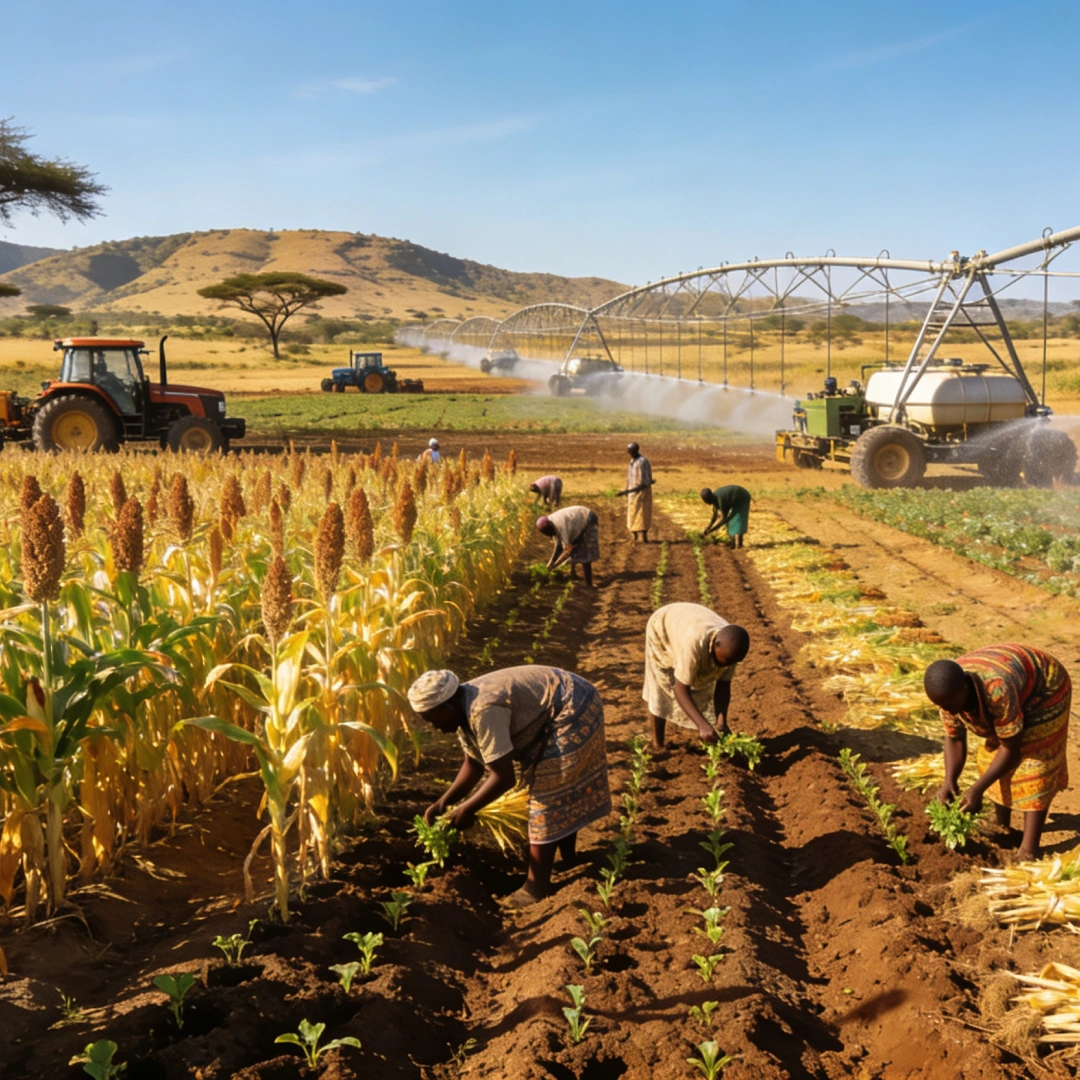
Mali has mobilized over 164 billion CFA francs to secure the 2026 agricultural season, a decision that reflects the authorities’ commitment to strengthening an agricultural sector essential to the national economy. In a context marked by climate risks, pressure on inputs, and food security challenges, this financial support sends a strong signal in favor of producers and the country’s food sovereignty.
This funding comes at a crucial time, as agriculture remains one of the main pillars of economic activity and employment in Mali. By securing the upcoming season, the authorities aim to limit the risk of supply disruptions, support yields, and protect the incomes of rural households.
Strategic Support for Rural Areas
In Mali, agriculture is not just a productive sector. It structures the economic lives of millions of families and supplies a large portion of domestic demand. The mobilization of over 164 billion CFA francs for the 2026 agricultural season aims to empower producers to work under better conditions.
The needs are numerous: availability of seeds, access to fertilizers, financing for farming operations, farm equipment, and technical support. By providing a substantial budgetary response, the government seeks to reduce the vulnerabilities that regularly hinder agricultural productivity.
Securing Production in the Face of Risks
The agricultural season remains exposed to several risks, including climate hazards, rising input costs, and logistical difficulties in certain areas. In this context, mobilizing significant resources allows for proactive measures rather than reactive ones.
The objective is also to avoid shocks in food markets. A poorly prepared season can quickly lead to reduced harvests, higher prices, and additional pressure on household purchasing power. By securing the means of production now, Mali is attempting to mitigate these cascading effects.
A Matter of Food Sovereignty
This decision goes beyond mere budgetary considerations. This initiative aligns with the concept of food sovereignty, which has become central for many African countries. For Mali, strengthening the 2026 agricultural campaign means protecting its capacity to feed its population with more robust local production.
Securing inputs and financing can also encourage better planning of agricultural activities. In the long term, this could improve the sector’s resilience and reduce dependence on imports in certain strategic sectors.
An opportunity to modernize agriculture
Beyond immediate support, this mobilization of funds can also serve as leverage to accelerate the modernization of Malian agriculture. If resources are properly allocated, they can finance not only production, but also extension services, irrigation, storage, and processing.
This is an important point, because agricultural performance does not depend solely on the quantity of available inputs. It also relies on the quality of the sector’s organization, access to infrastructure, and producers’ ability to better market their harvests. Producers’ Expectations
For farmers, the challenge now is to translate this announcement into concrete results on the ground. They expect timely availability of inputs, effective support mechanisms, and better coordination between public and private stakeholders.
The success of this campaign will therefore depend on the speed of implementation, transparency in resource allocation, and the ability to reach the most vulnerable areas. Without effective execution, even significant funding risks having limited effects.
A Test for the Country’s Agricultural Policy
The 2026 agricultural campaign will also serve as a test for Mali’s agricultural policy. If the mobilization of over 164 billion CFA francs translates into increased production, improved food availability, and real support for farmers, it can be considered a success.
Otherwise, it will serve as a reminder that funding, however substantial, must be accompanied by rigorous governance and close monitoring. For Mali, the challenge is therefore twofold: to support the current campaign and to lay the foundations for a more resilient agricultural system in the long term.