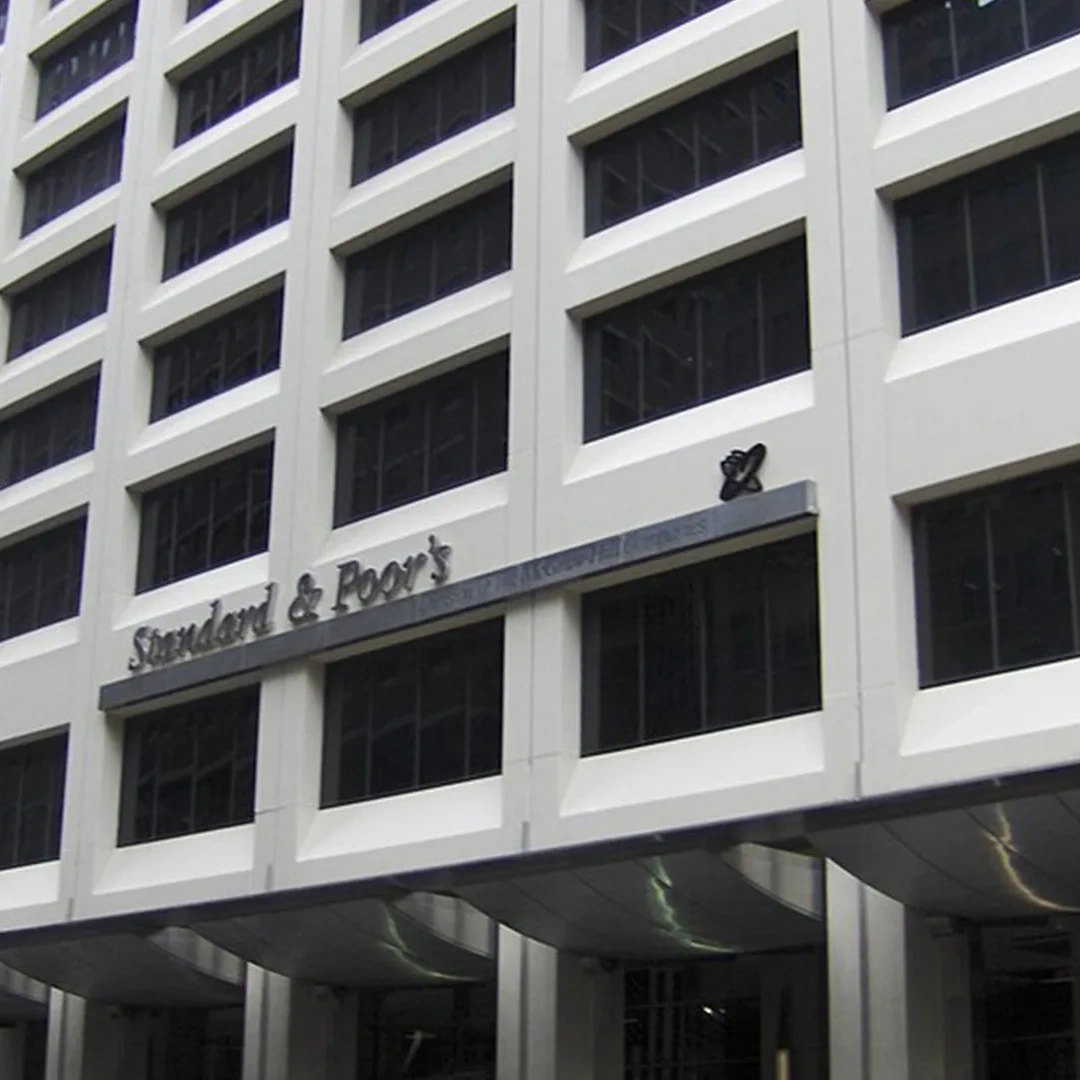
Standard & Poor’s Global Ratings has affirmed Ghana’s sovereign rating at B-/B with a stable outlook, a choice that reflects a gradual improvement in the country’s economic situation, but also the persistence of significant risks. This decision sends a nuanced message to the markets: Ghana is making progress in its financial reconstruction, but caution remains essential.
An Economy Recovering from the Debt Crisis
The rating affirmation comes as Ghana attempts to move beyond its severe debt crisis, marked by a default in December 2022. Since then, the country has undertaken a major debt restructuring, covering nearly 97% of the amounts involved, notably through the exchange of $13.1 billion in Eurobonds in 2024 and the restructuring of domestic debt in 2023.
This approach has helped to reduce the immediate pressure on public finances. According to the article, debt servicing is expected to return to an average of around 20% of government revenue by 2029, compared to nearly 48% at the height of the crisis.
Gold, the engine of macroeconomic recovery
One of the main drivers of the Ghanaian economy remains the rise in gold prices. Thanks to this favorable environment, the country recorded a current account surplus of $9.35 billion in 2025, representing 8.1% of GDP, as well as record foreign exchange reserves reaching $14.5 billion.
Growth also picked up, reaching 6% in 2025, driven by a recovery in domestic demand and renewed confidence among economic actors. At the same time, inflation fell to 3.8% in February 2026, while lower interest rates eased refinancing conditions.
Another important point: the creation of the Ghana Gold Board has strengthened the formalization of the gold sector, with export volumes doubling between 2023 and 2025.
Ambitious but still fragile fiscal reforms
The new government, installed at the end of 2024, has demonstrated a clear commitment to restoring fiscal discipline. Among the measures announced are a mandatory primary surplus of 1.5% of GDP, a public debt target reduced to 45% of GDP by 2034, and an independent fiscal council.
S&P believes, however, that the challenge is no longer simply to announce reforms, but to implement them sustainably. Ghana’s fiscal history, often marked by excesses during election periods, prompts the agency to exercise caution.
Structural vulnerabilities remain significant
Despite the progress, Ghana remains exposed to several major risks. The economy is heavily dependent on raw materials, particularly gold, which accounts for more than 66% of exports. A drop in gold prices could therefore quickly weaken the external accounts and public revenues.
The country also remains vulnerable to external shocks, especially geopolitical tensions that could increase energy and transportation costs. Furthermore, nearly half of the public debt remains denominated in foreign currency, exposing Ghana to exchange rate fluctuations.
A banking sector still under scrutiny
The financial system has not fully recovered. The non-performing loan ratio still stood at 18.9% at the end of 2025, reflecting the lingering effects of the debt crisis, government arrears, and the difficulties faced by several businesses.
Even though most banks have been recapitalized, some institutions remain vulnerable. This demonstrates that macroeconomic stability is not yet sufficient to eliminate the weaknesses in the banking sector.
Conclusion
Standard & Poor’s decision confirms that Ghana has taken a significant step in its economic reconstruction. However, the B-/B rating also serves as a reminder that the country remains under scrutiny, caught between encouraging recovery and persistent risks.
If fiscal discipline is maintained and reforms are implemented consistently, Ghana could improve its financial credibility in the coming months. Conversely, any relaxation of fiscal discipline or a new external shock could reignite tensions and slow the recovery momentum.
✍️ Want to contribute a high-value article?
Contact us for a guest post : [email protected]
Write to the editorial team