Côte d’Ivoire confirms its status as an emerging oil power with the discovery of a new hydrocarbon field named Calao South, announced on February 16, 2026, by Eni and PETROCI Holding. Located on block CI-501, this field contains light oil, natural gas, and condensates, bringing the combined potential of blocks CI-501 and CI-205 to approximately 1.4 billion barrels of oil equivalent (boe).
Technical Details of the Discovery
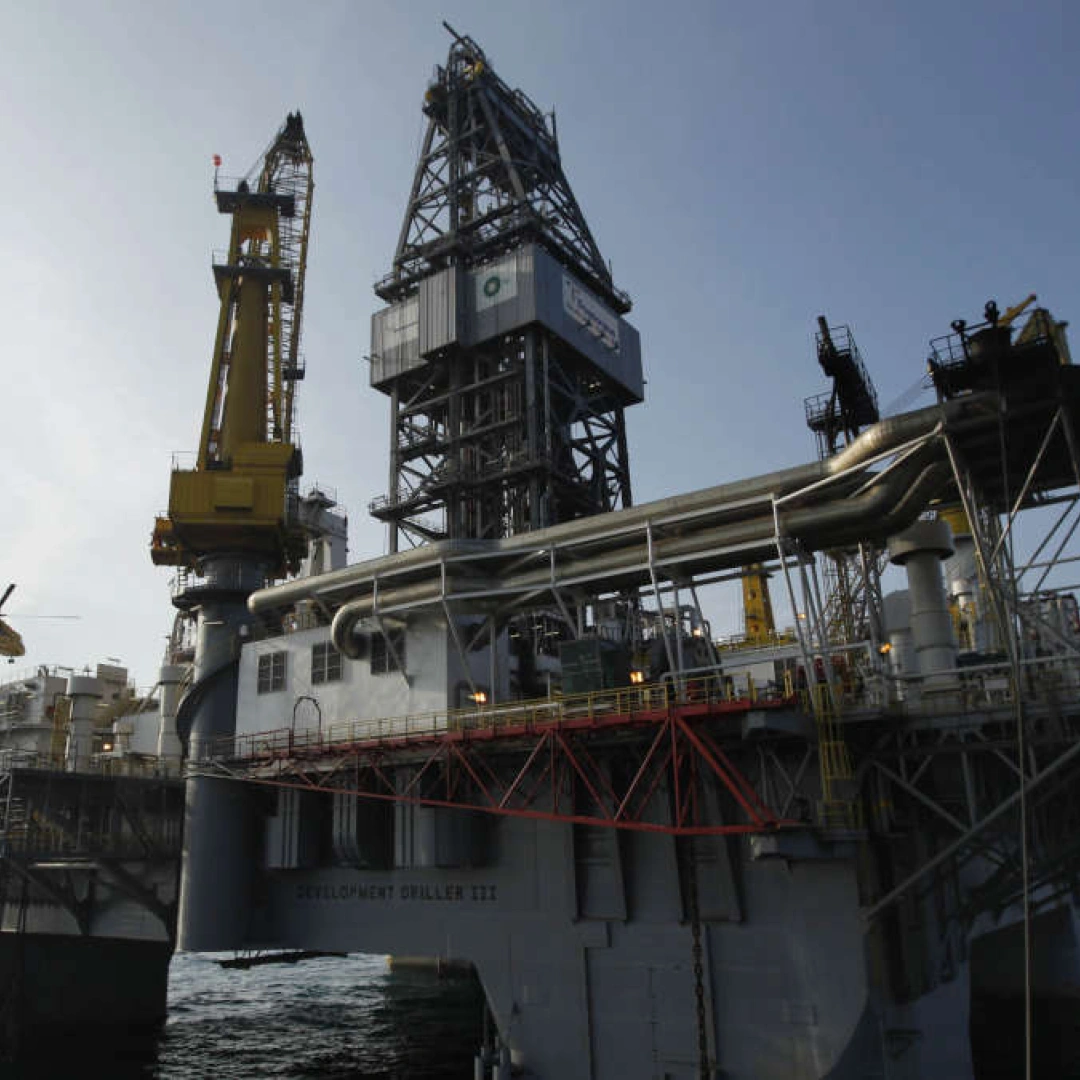
The drilling of the Murène South-1X exploration well, completed in early February 2026, reached a total depth of 5,058 meters, including a 2,200-meter water column in deep water. Located 8 km southwest of the Murène-1X well (block CI-205), this well has encountered high-quality reservoirs, confirming the commercial potential of the Calao South structure.
This discovery, along with that of Calao 1X (2024), reinforces the attractiveness of the Ivorian sedimentary basin, strategically located southwest of Abidjan.
Strategic context: Côte d’Ivoire accelerates its development
Since 2021, Côte d’Ivoire has made numerous offshore discoveries with Eni (Baleine, Calao, Murène) and other majors (TotalEnergies, BP). The country, a modest producer (25,000 barrels per day), aims to double its production by 2030 through:
- Gas production to supply the SIR and Azito power plants
- Light crude for premium exports (Brent-like)
- Strong partnerships with Eni (40% CI-501) and PETROCI (10-20%)
Calao South positions Côte d’Ivoire as a future member of OPEC+ light, competing with Ghana and Senegal (Sangomar).
Economic impact: a lever for transformation
Oil revenues and budget
With 1.4 billion barrels of oil equivalent (boe) at $70/boe, potential revenues exceed USD 70 billion over 20 years, representing 10-15 years of royalties/profits for the State (PETROCI share + taxes). By comparison, the Baleine field (600 Mboe) already generates USD 2-3 billion per year at full capacity.
Energy security: The gas from Calao South will support electricity production (currently 60% gas-fired), reducing LNG imports and stabilizing the industrial kWh price at 80-100 FCFA.
Industrialization
- Azito LNG carrier: +500 MW by 2028
- Fertilizer plants: Ammonia/urea export to Nigeria/Ghana
- Refining: Petroci-Total partnership for GD2 (200,000 b/d)
Opportunities for Ivorian companies
- Oil services: Côte d’Ivoire Oil Services (PETROCI shareholder), surveyors, catering
- Logistics: Abidjan/San Pedro ports + Vridi-Dabou barging
- Training: CIPRES will train 500 technicians/year
- Local suppliers: Minimum 40% content (2024 regulations)
Technical risks and challenges
- Deep water (2,200 m): High/high pressure/reservoir pressures
- Gas ratio: 60% requires gas lift or LNG train
- Oil price: Profitable >$55/boe, sensitive at $45
- Local content: Risk Low-cost Chinese subcontracting
2026-2030 Outlook
The Ministry of Mines confirms the acceleration of exploration campaigns on CI-802 and CI-700. Calao South could increase Ivorian production sevenfold by 2035 (150,000 barrels per day), generating an additional 5-7% of GDP and 50,000 direct and indirect jobs.
This discovery validates President Ouattara’s “Deep Water CI” strategy: international attractiveness + local value. Next milestone: Appraisal Campaign Q3 2026. Investors: position yourself in Oil & Gas Services CI now!
✍️ Want to contribute a high-value article?
Contact us for a guest post : [email protected]
Write to the editorial team