In an increasingly saturated market, knowing how to attract, qualify, and convert prospects is no longer a competitive advantage—it’s a matter of survival. Yet, many companies spend considerable budgets without a coherent strategy. This guide gives you the keys to building one, from A to Z.
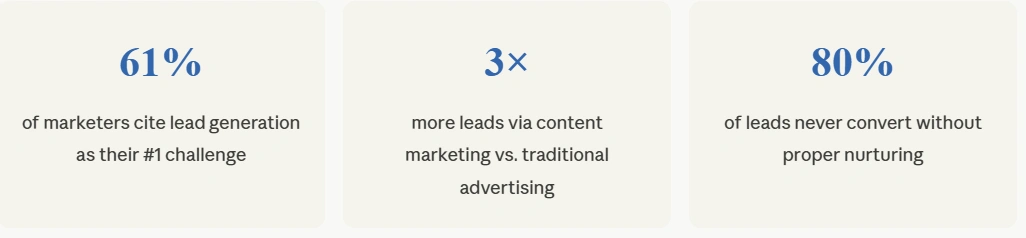
What exactly is lead generation?
A lead is someone who has expressed interest in your offer—by downloading content, filling out a form, or subscribing to your newsletter. Lead generation encompasses all the actions aimed at creating these moments of interest and then converting them into real sales opportunities.
An unqualified lead is a waste of time. A well-qualified lead is a conversation half won.
There are two main types of leads: MQLs (Marketing Qualified Leads), qualified by marketing based on behavior, and SQLs (Sales Qualified Leads), ready to be contacted directly by the sales team. The transition between the two is at the heart of any effective acquisition strategy.
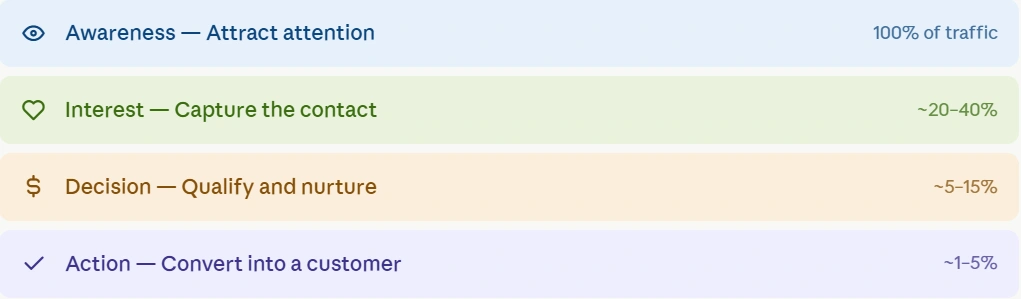
The Acquisition Funnel: Visualizing the Journey
Before choosing your tactics, you need to understand the journey your prospect takes, from discovery to purchase:
The 8 Most Effective Tactics in 2026
1. Content Marketing & SEO
Create articles, guides, and videos that answer your target audience’s questions. Well-optimized content generates leads continuously, 24/7, with no marginal cost.
2. Lead Magnets & Capture Pages
Offer a high-value asset (ebook, checklist, template) in exchange for an email address. The landing page should focus on a single benefit.
3. Email Marketing & Lead Nurturing Sequences
Once a lead is captured, a series of automated emails educates them, builds trust, and prepares them for purchase.
4. Paid Advertising (SEA, Social Ads)
Google Ads, Meta, LinkedIn—each platform targets a different intent. Retargeting allows you to capture undecided visitors with a tailored message.
5. Social Selling & LinkedIn Outreach
Identify, connect with, and engage prospects on LinkedIn before scheduling a meeting. Works particularly well in B2B.
6. Webinars & Live Events
Online events generate strong engagement and allow you to qualify participants based on their behavior (questions asked, time spent).
7. Chatbots & Automated Qualification
A well-configured chatbot on your website can qualify visitors in real time and route them to the right salesperson or the right sequence.
8. Referral Programs & Partnerships
Your satisfied customers are your best salespeople. A structured referral program can significantly reduce your customer acquisition cost.
Measure what really matters
Generating leads isn’t enough—you need to understand their quality and profitability. Key metrics to track:
Cost per Lead (CPL)
Divide your marketing spend by the number of leads generated. A good CPL varies significantly by industry, but it should generally decrease as you optimize your campaigns.
MQL → SQL → Customer Conversion Rate
This ratio reveals the quality of your targeting and the effectiveness of your lead nurturing. A high MQL but low SQL ratio indicates a qualification issue upstream.
Customer Acquisition Cost (CAC) and LTV
CAC should be significantly lower than Customer Lifetime Value (LTV). An LTV/CAC ratio greater than 3 is generally considered healthy for a sustainable business.
It’s not the volume of leads that determines a sales team’s performance, it’s the quality of the signal each lead carries.
Mistakes to avoid
Even experienced teams fall into these traps. Buying contact lists without prior qualification is one of the surest ways to burn through a budget and damage your sender reputation. Failing to align marketing and sales on the definition of a “good lead” creates friction and online losses. Neglecting post-capture nurturing, finally, is the most common mistake: 80% of leads require multiple touchpoints before they’re ready to buy.
✍️ Want to contribute a high-value article?
Contact us for a guest post : [email protected]
Write to the editorial team